A board game table should make play easier, not make the room harder to live in.
That is why size matters more than most buyers expect. It affects how comfortably people sit, how well games fit on the surface, how easily players can reach the middle, and whether the table feels natural in the room the other six days of the week.
The right size is usually not the biggest table you can squeeze into the house. It is the one that fits your space well, supports the games you actually play, and feels comfortable for the group you gather most often.
This guide breaks that decision down in a practical way, using real sizing examples from Bandpass Design’s collection to show what different table sizes actually solve.
Start With the Room, Not the Table
One of the most common sizing mistakes is choosing a table based on ambition instead of the room it will actually live in.
A table can look perfect on paper and still feel awkward in real life if it blocks a walkway, crowds a door, or leaves no room to pull out chairs comfortably. Before comparing finishes, fabrics, or style packages, measure the room the way you plan to use it.
What to Measure First?
Start with the full floor space, then work outward from the table’s likely position.
You want to account for:
-
wall to wall dimensions
-
door swings and natural walking paths
-
nearby furniture
-
chair pullback space
-
how the room needs to function on non game days
A good starting rule is to leave at least 36 inches of clearance around the table so people can sit, stand, and move around without the room feeling cramped.
Why Table Footprint Is Only Part of the Story
A published table size does not tell you how the room will actually feel once chairs, people, drinks, and accessories are in place.
That matters because a table can technically fit and still feel wrong. Decorative rails, recessed play areas, and cup holder placement can all affect how much usable space the table gives you in practice.
The best fit is not the one that fills the room most completely. It is the one that lets the room keep working.
Room Type Changes What Makes Sense
1) Dining Room
A dining room usually gives you more flexibility for a full size table, especially if the table needs to handle meals as well as game nights.
2) Living Room
A living room usually asks for more restraint. Sofas, side tables, and everyday foot traffic shape what is realistic.
3) Dedicated Game Room
A dedicated game room gives you more freedom to size up, but even then, there is no point choosing a table so large that it hurts reach, movement, or comfort.
If the table is going in a shared family space, the best choice is often the one that blends into daily life rather than dominating it.
Size for the Group You Actually Play With
A lot of buyers overestimate how much seating they really need.
They imagine the biggest game night of the year, buy for that, and end up living with too much table the rest of the time. In most homes, that is not the smartest tradeoff.
The better approach is to size for your regular group first, then decide whether occasional larger sessions justify a bigger table.
Comfort Matters More Than Technical Capacity
A table that can seat six in theory may not feel good with six people actually using it.
Comfort usually means:
-
enough elbow room to shuffle, roll, write, and reach
-
enough edge space for cards, player boards, snacks, and a rulebook
-
enough breathing room for longer sessions so nobody feels cramped
There is a real difference between a table that fits players and a table that seats them well.

Dresden Size Benchmarks
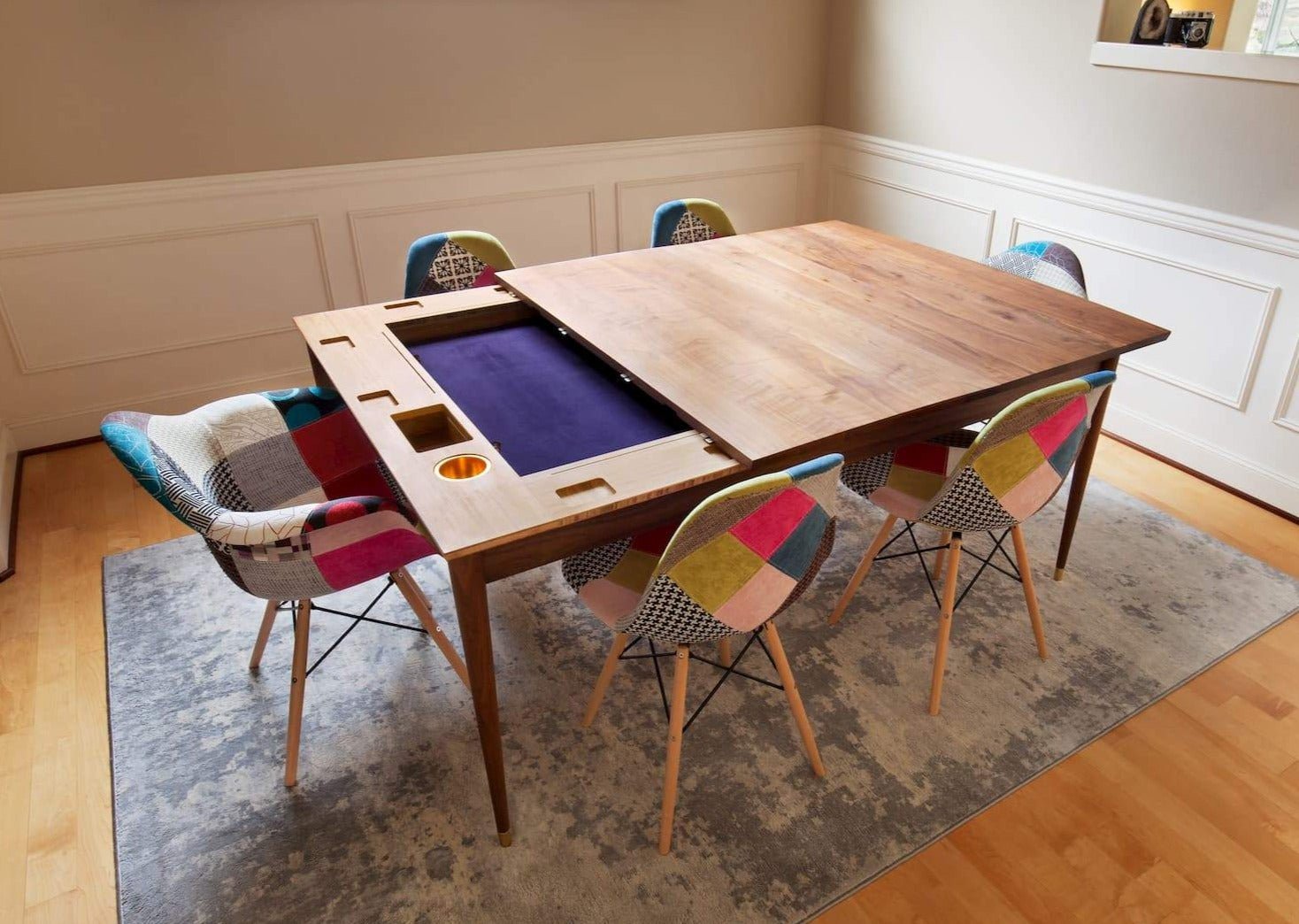
The Dresden is Bandpass Design’s clearest sizing reference point because the dimensions are straightforward and scaled intentionally.
1) Dresden Standard
-
78" x 52"
-
starting at $3,695
This is the most approachable size in the line and a strong fit for homes that regularly host four to six players. It gives you a substantial play surface without pushing too far into oversized territory.
2) Dresden XL
-
90" x 52"
-
starting at $4,795
This size makes more sense when larger groups are part of your normal routine, not just an occasional event. It gives you more room along the length without changing the overall width.
3) Dresden Battleground
-
96" x 64"
-
starting at $5,895
This is the largest option and the one that earns its place when you regularly host bigger sessions or play games that need more spread. It is not simply a safer version of the smaller tables. It is a different commitment in the room.
What Different Group Sizes Usually Need
1) Two Players
For couples or solo players who occasionally host, a very large table is often unnecessary. A moderate surface usually gives you enough room for the game plus a little breathing space.
2) Four Players
This is the sweet spot for many homes. Four player households often do best with a table that supports comfortable edge space without consuming too much room.
3) Six Players
Six is where sizing starts to matter more. If the table is too narrow or too tight, the surface can feel crowded fast once player boards, snacks, and accessories are added.
4) Eight or More
If you regularly host eight or more, a larger table can be worth it. But it should solve a real need. If it only adds bulk and distance, it is probably more table than you need.
The Games You Play Should Influence the Size You Buy
Seat count only tells part of the story.
Some games need very little room. Others grow outward as the session goes on. If you size a table only by the number of players, you can still end up short on a useful surface.
Most Households Do Not Need the Largest Possible Table
This is worth stating clearly.
If your group mostly plays card games, dominoes, puzzles, and lighter family titles, a moderate table is often the smarter choice. Buying for sprawling epic games you rarely play can leave you paying for size you do not actually use.

Different Games Create Different Surface Demands
Card Games and Smaller Format Play
Card games, dominoes, and casual tile games usually do not need a huge surface. What they need is a table that feels comfortable, inviting, and easy to gather around.
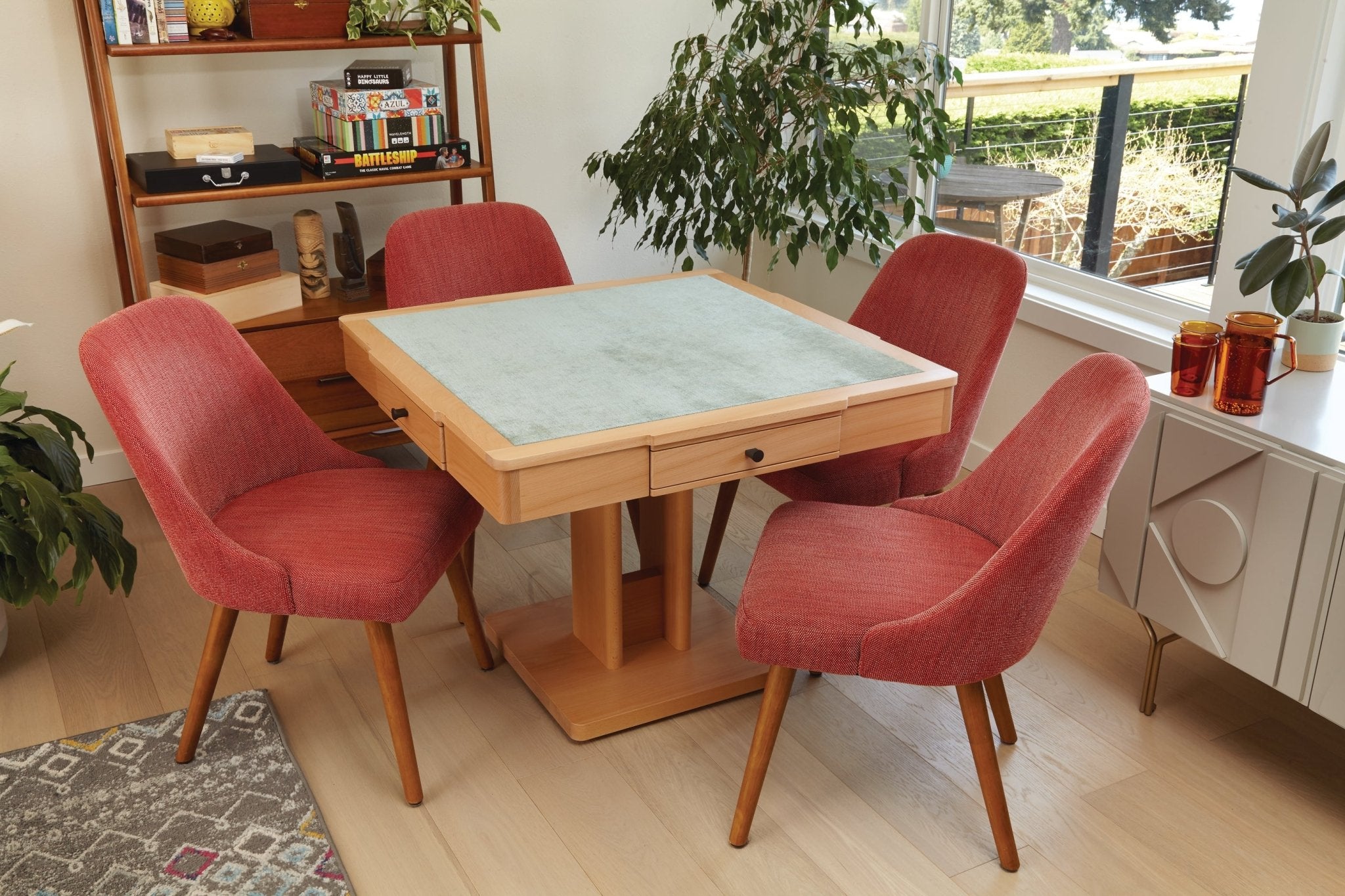
That is one reason a table like The Mimosa makes sense for some buyers. It is clearly positioned as a wooden card table for four player card games, dominoes, and puzzles, which gives it a more focused role than a large dining height game table.
Family Board Games
This is where many households land. Most family board games need more room than a deck of cards, but not a massive table. A well chosen standard size is often enough.
Large Strategy Games
Large strategy games change the equation quickly. It is not just the board in the middle that matters. You also need room for player mats, tokens, cards, and everything that builds up around the edges.
That is when longer or wider surfaces start to justify themselves.
Tabletop RPGs
RPG groups often need more space than people first expect. Books, maps, character sheets, dice, note taking space, and sometimes a screen or laptop can fill a surface surprisingly fast.
Think in Terms of Component Spread
A good sizing decision usually comes from thinking beyond the box.
Ask yourself:
-
how large is the central board
-
how much space does each player need around the edge
-
will the game use trays, tokens, card rows, or dice areas
-
will drinks and snacks share the table
-
will you be sitting there for one hour or five
A table that technically fits the game is not always a table that plays the game well.
Shape Matters More Than Most Buyers Expect
Length and width matter, but shape changes the experience just as much.
It affects reach, player spacing, how boards sit on the surface, and how naturally the table fits into the room.
Rectangular Tables Are Usually the Best Default
For most homes, rectangular tables are the safest choice.
They work well across a wider range of player counts, handle modern board game layouts more naturally, and make more sense as shared dining and gaming furniture. They also give each player a clearer edge zone.
That is a large part of why the Dresden line works so well as a practical benchmark.
Square Tables Work Best for Smaller Groups
Square tables can feel balanced and comfortable with four players, especially for card games, puzzles, and lighter family play.
That is also why a table like The Mimosa has a clear place in the collection. It is built around a smaller, more intimate style of play rather than trying to solve every possible hosting scenario.
Round Tables Feel Social, but Are Less Flexible
Round tables can be good for conversation, but many modern board games do not fit them as naturally. Straight edged boards, player mats, and more structured table layouts usually work better on rectangular or square surfaces.
Reach Still Matters
A table that is too wide creates its own problems.
If players have to stand up to move pieces, stretch awkwardly to the middle, or constantly ask someone else to pass components, the extra surface is not improving the game. It is slowing it down.
Decide Between Dining Height and Coffee Table Format
Before you settle on dimensions, decide what kind of table you actually want to live with.
This is not just about aesthetics. It changes how the table fits into the home and what kind of play it supports best.
Dining Height Tables
Dining height tables are the strongest fit for buyers who want one central piece that can handle meals, longer sessions, and regular hosting.
The Dresden is the clearest example of this format. It is built as a true dining and gaming table rather than a niche gaming piece that only makes sense on game night.
Coffee Table Format
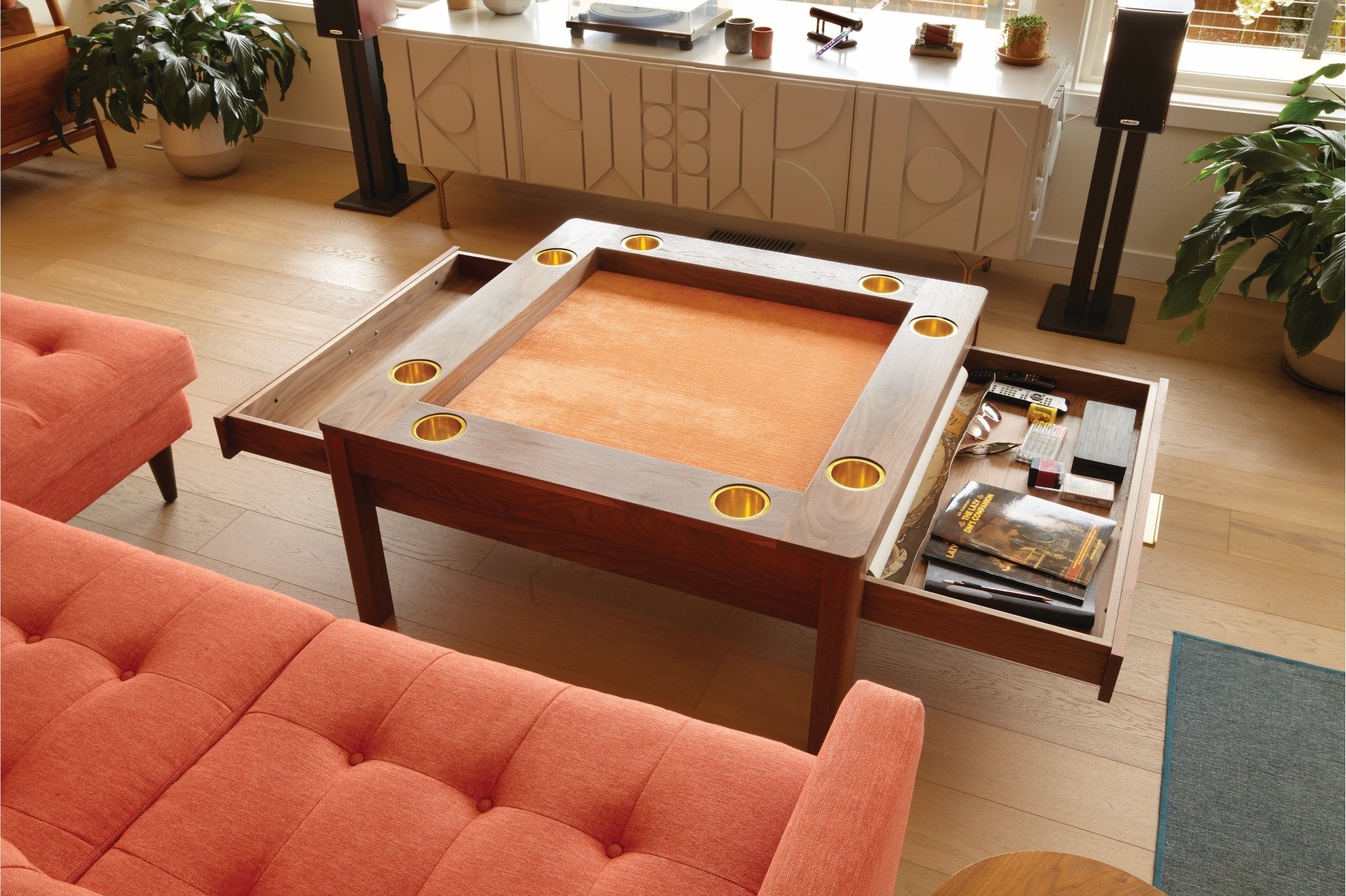
Coffee table format makes more sense when the table needs to live in the lounge or family room and blend into everyday life visually.
That is where The Firefly stands out. It is positioned as a gaming coffee table, which makes it a better fit for buyers who want:
-
a lower profile table for a living space
-
casual or smaller group play
-
a table that feels like furniture first and a gaming surface second
-
a more compact option than a full dining height setup
Smaller Format Can Be the Better Choice
Not every household needs a large flagship table.
If your actual use case is puzzles, cards, dominoes, or casual board games in a living space, a compact coffee table format may be the more natural fit.
Likewise, if your goal is four player card play in a dedicated corner or multi use room, a card table like Mimosa can make more sense than sizing up to a larger dining table you do not really need.
That is an important part of choosing well. Bigger tables solve some problems, but smaller formats often solve the more common ones.
Real Product Options Help Clarify the Decision
Bandpass Design’s collection is useful because it does not treat every buyer like they need the same table.
If You Want a Full Dining and Gaming Table
The Dresden line gives you the clearest stepped sizing path:
-
Standard: 78" x 52"
-
XL: 90" x 52"
-
Battleground: 96" x 64"
That makes it easier to choose based on how much room you have and how much table you will truly use.
If You Want a Focused Four Player Table
The Mimosa is a better example of a table with a narrower purpose. It is built around intimate play and supports a more traditional card table use case, while still offering customization in wood species, hardware, and fabric.
From the options shown, that includes wood choices such as:
-
Walnut
-
Maple
-
White Oak
-
Cherry
-
European Beech
-
Sapele
-
Khaya
-
Jatoba
It also offers hardware finishes including:
-
Polished Chrome
-
Aged Brass
-
Oil Rubbed Bronze
And fabric colors including:
-
Coral
-
Teal
-
Royal
-
Aubergine
That kind of customization makes more sense when the table is meant to feel tailored to a specific room and style of play.

If You Want a Living Room Gaming Table
The Firefly fills a different role. It is the collection’s coffee table answer for buyers who want game friendly function in a lower profile format.
The options shown include several wood choices and fabric colors, which reinforces the idea that this table is meant to live comfortably in a finished living space rather than feeling like specialty furniture dropped into the room.
Common Board Game Table Sizing Mistakes
Most sizing mistakes come from the same few habits.
-
Buying for the Biggest Night of the Year: If your regular group is four, buying for eight or ten can leave you with too much furniture and not enough room.
-
Ignoring Room Clearance: A table may fit on paper and still feel wrong once chairs, movement, and daily use come into the picture.
-
Thinking Seat Count Is the Whole Story: Capacity matters, but it says very little about comfort once boards, snacks, rulebooks, and player aids are added.
-
Choosing a Table That Is Too Wide: Extra width sounds generous until players struggle to reach the middle.
-
Forgetting About Daily Use: A good game table should still make sense on an ordinary weekday. If it becomes inconvenient for meals, homework, crafts, or everyday living, it is not the right fit.
Choose the Size You Will Actually Use
The best board game table size is the one that feels natural in the room and easy to use on a normal week.
Start with the room. Be honest about your regular group size. Think about the games you actually play most. Decide whether your home needs a dining room table, a coffee table format, or a smaller dedicated card table. Then check the full setup, including chairs, reach, clearance, and how the room will feel when the game is packed away.
That is what good sizing comes down to. If you want to go deeper into features, formats, and what to prioritize before buying, our board game table buying guide can help you think through the bigger picture.
At Bandpass Design, the right table is not simply the biggest one in the room. It is the one that supports the way you actually live and play, and the one you will keep being happy to use long after the first game night.