A board game table should make playing easier. It should fit naturally into everyday life, not ask you to rearrange the whole room around it.
Some tables are too big for the space they live in. Some are loaded with features you will barely use. And some work well for one kind of play, but feel awkward for the way most households actually gather.
That is why shopping for a board game table is not really about finding the “best” one. It is about finding the one that makes sense in your home, your space, and the way you want your gaming experience to feel.
Whether you are looking for a custom board game table that doubles as everyday furniture or a more focused setup for cards, puzzles, or strategy games, the right choice should do more than look impressive. It should support the way you actually play and live.
This guide walks through table type, size, seating, surface, features, construction, and budget so you can tell the difference between what sounds impressive and what will actually serve you well over time.
Choose the Right Table Type
Before you compare features, start with the type of table itself. That choice does more to narrow the field than almost anything else. It helps you focus on how the table will actually be used instead of getting distracted by extras that may not matter once it is in your home.
Dining-Height Board Game Table
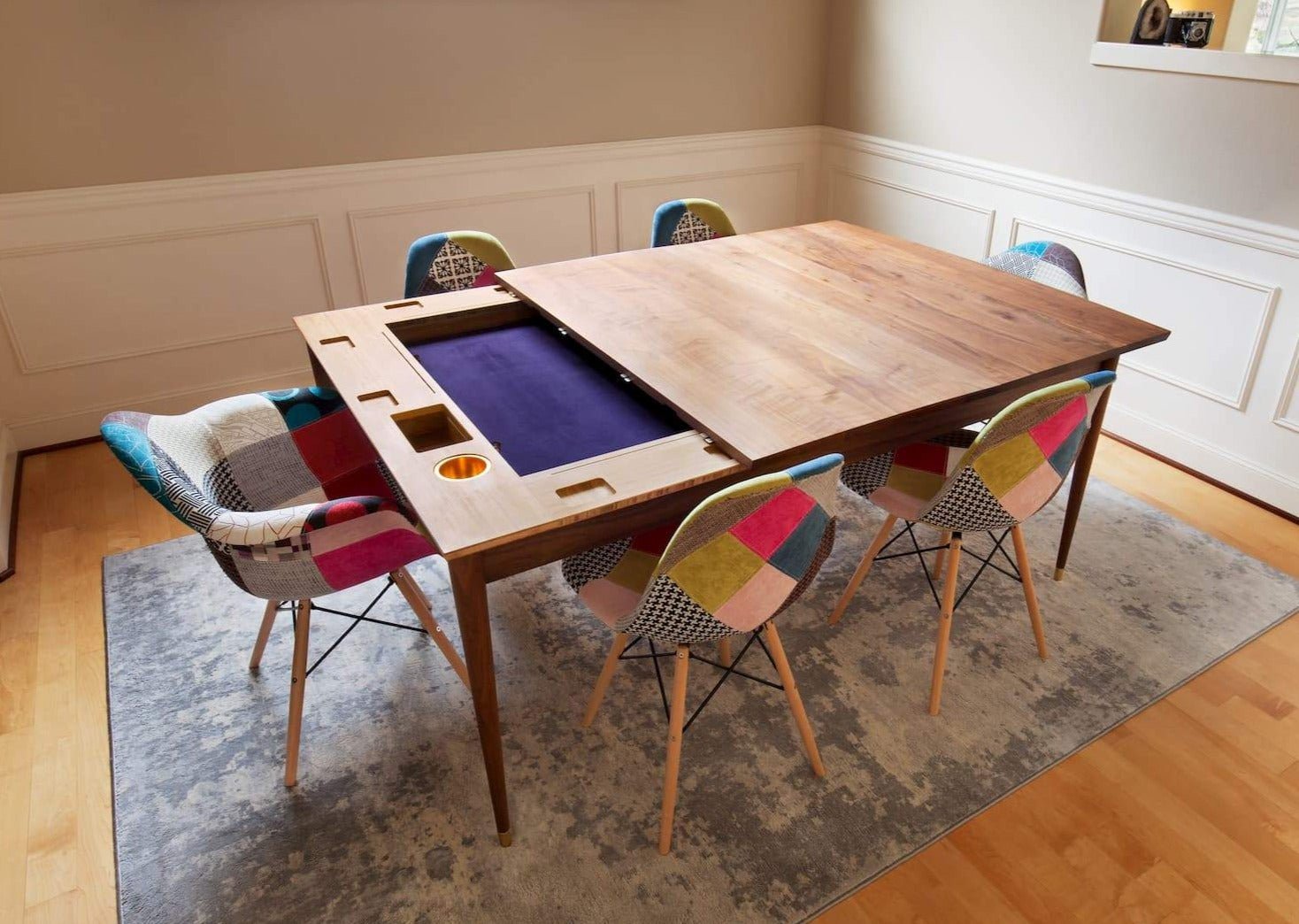
A dining-height board game table is the best fit for households that want one table to do more than one job. It works for meals, hosting, homework, and longer play sessions without needing a separate game room.

The Dresden stands out because it combines a true dining table look with a serious gaming setup underneath. Its removable dining leaves, recessed bamboo play surface, solid hardwood construction, and built-in player stations make it especially well suited for homes that want everyday function without giving up a better play experience.
Gaming Coffee Table
A gaming coffee table makes the most sense when play happens in the living room. It suits apartments, smaller homes, and more casual sessions where people naturally gather around the sofa.

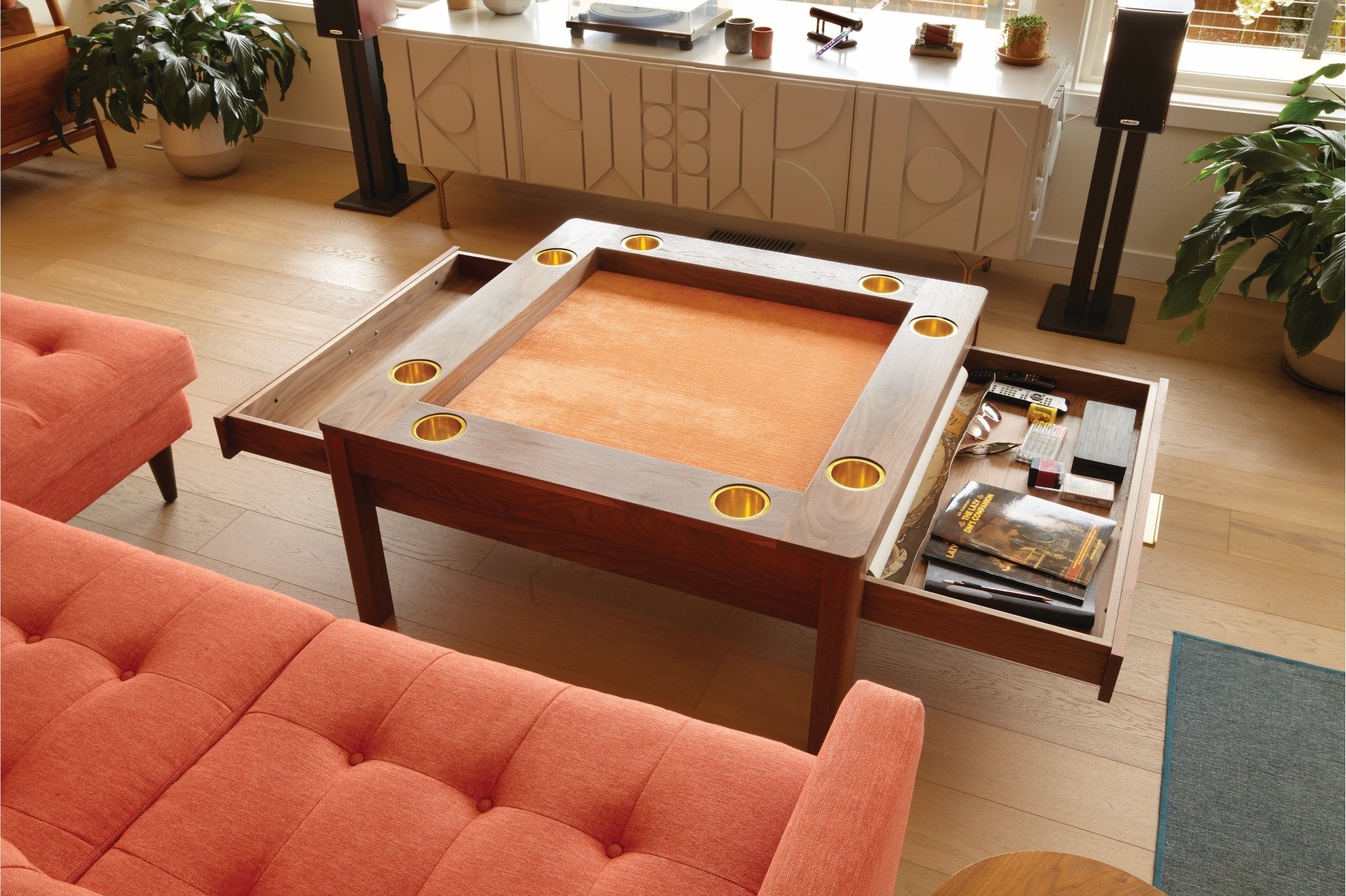
The Firefly coffee table works especially well here because it is built for couch gaming, not just scaled down from a larger table concept. Its lower profile, hidden gaming area, soft-close storage drawers, and eight cup holders make it a practical option for households that want gaming to feel easy, relaxed, and integrated into daily life.
Four-Player or Specialty Table
Some households do not need the biggest table. They need the right one. Specialty tables are often the better choice for mahjong, cards, dominoes, and puzzles, especially when space is limited or the group size stays consistent.

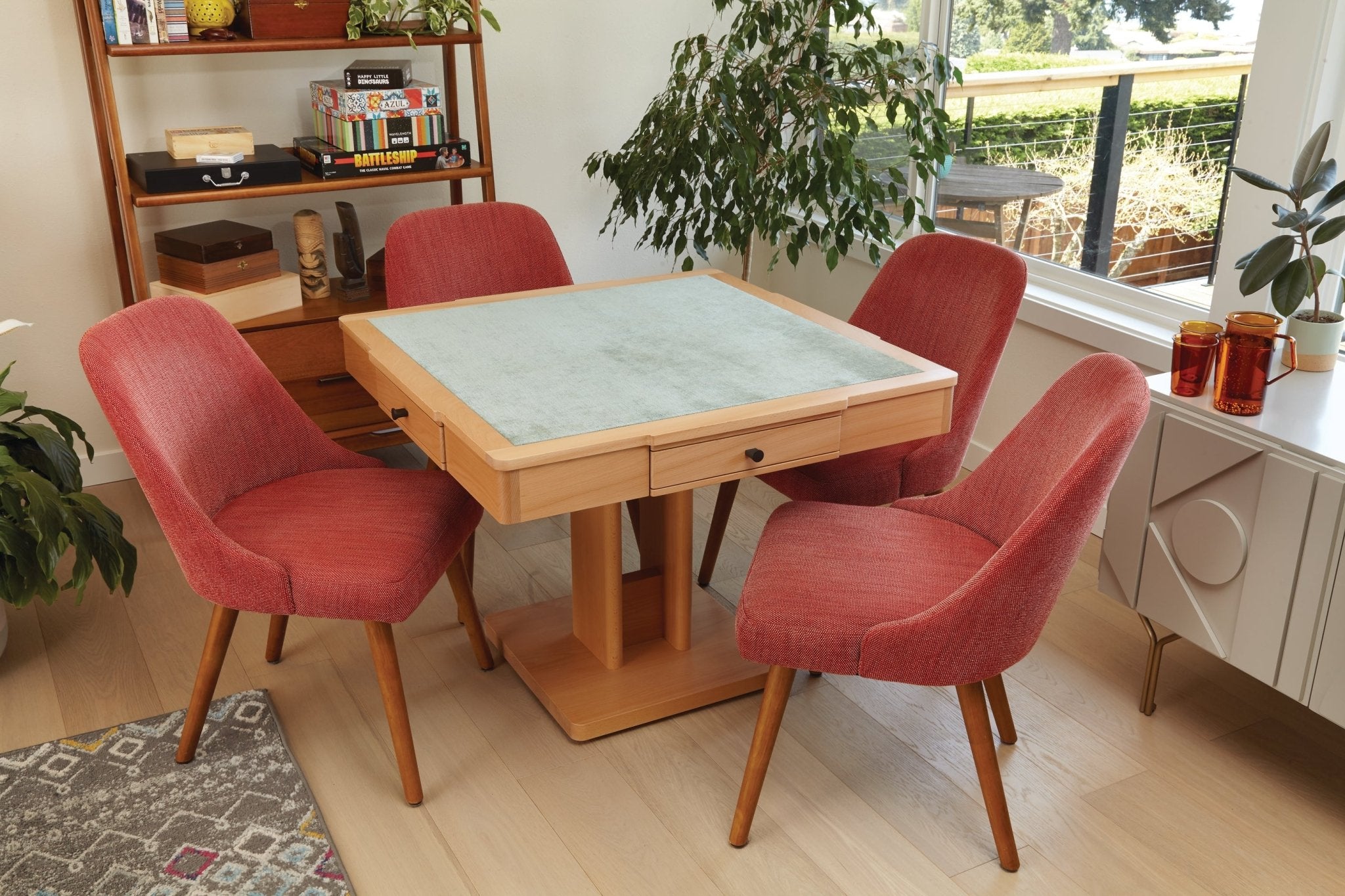
The Mimosa is a strong example of that approach. It is designed for focused four-player use, with integrated drawers, hinged desktops, cup holders, and a compact footprint that feels more intentional than buying a larger table you may not fully use.
Measure Your Space Before You Shop
A board game table should fit the room in a way that still feels comfortable when the game is over. That means thinking beyond the play surface and looking at how the table, chairs, and surrounding space will function in everyday life.
1) Measure the Full Table Footprint
Do not judge a table by the gaming surface alone. The full footprint or table size tells you how much room the table actually takes up, while the inner play area only shows how much usable space you have during play.
That difference matters. A table may seem manageable based on the recessed surface, but once the outer frame is included, it can take up far more room than expected.
2) Leave Enough Room for Chairs and Movement
A table should not make the room feel difficult to use. Once chairs are pulled out, people still need enough space to sit down comfortably, get up easily, and move around without bumping into walls or other furniture.
This is where many setups fall apart. A table can technically fit in a room and still feel too tight once real movement is involved.
3) Match the Table to the Room It Will Live In
The right size often depends on the room itself. Dining rooms can usually handle a larger dining-height table, especially if it needs to support meals and game nights in the same place. Living rooms, apartments, and more casual spaces often work better with a lower or more compact format.
That is why a coffee table like The Firefly can feel more natural in smaller living spaces, while The Mimosa suits compact four-player play. In homes that need one table to do both jobs well, The Dresden makes more sense.
4) Size for Regular Use, Not Rare Maximums
It is easy to shop for the biggest group you might host once in a while, but that often leads to a table that feels oversized the rest of the time. In most homes, the better choice is the size that fits regular use, not occasional overflow.
Think about how many people play most often and how the table will be used week to week. That usually leads to a smarter and more comfortable decision.
5) Let the Games You Play Guide the Size
Different games need different amounts of space. Strategy games and role playing games usually need a larger surface, especially when player boards, cards, tokens, and snacks all need room at once. Cards, mahjong, dominoes, and puzzles often work well on a smaller footprint.
This is one of the clearest ways to avoid overbuying. The best size is not always the biggest one. It is the one that suits the way you actually play.
6) Avoid Going Too Small or Too Large
A table that is too small can feel crowded, cluttered, and frustrating during play. A table that is too large can dominate the room, cost more, and make the space feel less comfortable day to day.
The best setup usually lands in the middle. It gives everyone enough room to play comfortably without making the table feel bigger than the home really needs.
Focus on Features That Improve Play
Not every feature adds real value. The best ones make the table easier to use, easier to live with, and better suited to the way people actually play.
1) Recessed Play Areas
A recessed play area is one of the most useful features a game table can have. It helps keep cards, boards, and pieces in place, and it makes it much easier to pause a game and come back to it later without clearing everything away.
This matters most for longer sessions, family games that stretch across the day, and households that do not want to reset the table every time they stop.
2) Removable Dining Tops
A removable dining top is what makes a game table truly multi-use. It allows the table to shift back into everyday dining mode when the game is over, which is especially important in homes where one table needs to do more than one job.
For many buyers, this is not just a nice extra. It is what makes the table practical enough to justify in the first place.
3) Cup Holders
Cup holders are easy to underestimate until someone spills a drink near cards, boards, or a padded surface. They help protect the table and make game night feel more relaxed, especially in family settings or casual living room play.
This is one of those features that sounds small but earns its keep quickly.
4) Player Stations and Dice Areas
Dedicated player stations help give everyone a little more order during play. They create space for cards, tokens, notes, snacks, and other essentials without everything drifting into the middle of the table.
Dice bins and trays do something similar. They keep rolls contained, reduce clutter, and make the table feel more organised during larger or longer games.
5) Storage That Keeps the Room Tidy
Built-in storage can make a bigger difference than buyers expect, especially in smaller homes. Drawers, hidden compartments, or accessory storage help keep rulebooks, decks, and game pieces close by without making the room feel overrun by hobby gear.
That is part of what makes tables like The Firefly so practical. The storage is not just there for convenience. It helps the table work better in a real living space.
6) Surface Options That Match How You Play
The playing surface affects comfort, cleanup, and how different games feel on the table. Softer, cushioned surfaces can be better for cards, dice, and longer sessions, while firmer surfaces may suit other styles of play better.
This is also where material choice becomes more than a visual preference. A good surface should support the games you play most, not just look appealing in the product photos.
7) Features Worth Paying For
The best features are usually the ones tied to real habits. If you play often, host regularly, or need the table to work in a shared room, practical upgrades tend to matter more than novelty add-ons.
In most cases, the most worthwhile features are:
-
recessed play areas
-
removable dining tops
-
cup holders
-
useful storage
-
surface options that match your play style
Those are the features most likely to improve the table day after day, not just on delivery day.
Materials, Construction, and Customization Together
A board game table does more than most furniture. It may serve as a dining room table, a game surface, a puzzle station, or even a workspace, which means materials and construction matter more than they do with an occasional-use piece.
Good design starts with honest materials. Solid hardwood construction generally holds up better over time than lower-grade builds, especially in homes where the table is used often and expected to shift between everyday life and game night without feeling delicate. That is where details like surface durability, hardware, joinery, and removable tops start to matter.
1) Prioritize Materials That Can Handle Real Use
Frequent use exposes weak points quickly. Dining tops get bumped, edges take wear, and removable sections have to sit flat and feel secure over time. A well-built table should feel stable in both its everyday and gaming modes, not like one function was added as an afterthought.
Across Bandpass Design’s lineup, the material choices are a strong part of the appeal.
-
The Dresden uses solid hardwood for the dining top, legs, cup holders, dice bins, and aprons, with a recessed bamboo gaming surface underneath.
-
The Firefly pairs a solid hardwood body with a veneered top to reduce weight and make the removable surface easier to handle.
-
The Mimosa is built from hardwood as well, with an upholstered playing surface and thoughtfully chosen hardware details that make it feel more furniture-grade than utilitarian.
2) Pay Attention to the Playing Surface
The play surface affects comfort more than many buyers expect. Card games, puzzles, mahjong, and tabletop games all feel different depending on whether the surface is firm, cushioned, smooth, or slightly grippy.
That is one reason Bandpass’s options feel distinct rather than interchangeable.
-
The Dresden can include a wood-trimmed, double-sided inset with velveteen on one side and cushioned speed cloth on the other, which gives it broader flexibility across different types of play.
-
The Firefly uses Knoll fabric with a moisture-resistant barrier over an upholstered gaming area, which makes sense for living room use where spills and casual sessions are part of the experience.
-
The Mimosa also uses easy-clean Knoll fabric with a moisture-resistant barrier, giving card, domino, mahjong, and puzzle players a surface that feels practical without being overly technical.
3) Construction Details Matter More Than Marketing Language
“Heirloom quality” only means something when the details support it. Look for clear information about wood species, removable tops, hardware, and how the table is meant to function over time.
-
Dresden’s removable dining leaves and liftable inset are part of what make it feel truly multi-use rather than simply convertible.
-
Firefly’s soft-close drawers and lighter removable top make the transitions feel easier in a living room setting.
-
Mimosa’s hinged desktops, drawers, cup holders, and finish options show that small-format tables can still feel considered and substantial.
That is usually a better sign of quality than a broad luxury language on its own.
4) Customization Should Improve Fit, Not Just Add Options
Customization is most useful when it helps the table fit your home and your habits more naturally. It becomes less useful when it turns into a long list of choices that sound impressive but do not change daily use in a meaningful way.

This is one area where The Dresden clearly leads. Its customizer allows buyers to choose size, top and inset options, style package, wood species, and fabrics. Based on the current setup, buyers can choose between Standard, XL, and Battleground sizes, select whether to include the inset or dining top, choose from multiple style directions, and customize wood and fabric combinations. That makes Dresden the strongest fit for buyers who want a more tailored table for dining and game use in one.

The Firefly offers a lighter customization path, with wood species and fabric color options, plus request-based custom work for buyers who want adjustments such as accessory rails or lower shelf changes.

The Mimosa also offers meaningful choice through wood species, hardware finishes, and fabric selections, which suits buyers who want a more refined specialty table without going through a fully complex build process.
Bandpass Design also offers a guide on choosing game table fabric, which can help buyers compare surface feel, durability, and day to day practicality before making a final decision.
Budget for the Full Purchase
A board game table budget should cover more than the number listed on the product page. Size, materials, accessories, and customization all shape the final cost, especially when the table is meant to stay in your home for years.
Start with the Base Price
Bandpass tables begin at different price points depending on type and complexity. The Dresden Standard starts at $3,695, The Firefly is $4,500, and The Mimosa is $4,800, with free shipping costs in the USA shown across the product pages and customizer.
From there, the cost changes based on size, materials, and configuration. With The Dresden, moving from Standard to XL or Battleground raises the price, and added options like the inset or dining top increase it further.
Know What Is Actually Driving the Cost
Not every price increase is cosmetic. In many cases, it reflects a larger build, better materials, or a table that is doing more than one job in the home.
A bigger table uses more material and takes on a larger role in the room. A dining top adds flexibility. A double-sided inset, upgraded wood species, or useful accessories can also be worth the added cost when they improve the way you actually play and live with the table.
Match the Spend to the Table’s Role
A higher price is easier to justify when the table gets used often. If it serves as your main dining table, a regular gathering spot, or the centre of weekly game nights, stronger materials and better construction usually make more sense.
That is where the three Bandpass tables separate clearly. The Dresden can replace both a dining table and a game table. The Firefly builds value through hidden play space, storage, and a living-room-friendly design. The Mimosa is more specialised, but for cards, mahjong, dominoes, and puzzles, that focused format may be the better buy.
Customize with Intention
Customization can improve value, but it can also push the final price up quickly. The smartest approach is to start with the choices that affect use most: size, wood species, top setup, and surface materials.
Once those are right, style and finish choices become easier to judge. In most cases, a few thoughtful upgrades will serve you better than selecting every available option.
Think in Long-Term Value
A board game table can be easier to justify when it replaces other furniture or serves more than one purpose well. A multi-use table that handles dining, hosting, and regular play may offer better long-term value than a cheaper option that only solves one need.
At the same time, not every buyer needs the largest or most customized setup. The better choice is the one that fits your routine, your space, and how often the table will actually be used.
Conclusion
The right board game table should earn its place in your home.
It should feel good to use on game night, fit naturally into the room the rest of the week, and make everyday life easier rather than more complicated. That usually means looking past the biggest size or the longest list of features and focusing instead on what fits your space, your habits, and the kinds of games you actually play.
For some homes, that will mean a dining-height table that can handle meals and longer sessions in the same space. For others, it will mean a coffee table or a smaller specialty table that feels more natural in the way the household already gathers.
At Bandpass Design, that balance matters. A board game table should not just look impressive. It should make it easier to gather, easier to play, and easier to live with over time.