A good game night isn’t a box of games and a few friends who happen to be free. It’s a hosting project. The difference between a night people ask to repeat, and one that fizzles by nine comes down to a few decisions made before anyone arrives.
There are five of them: who you invite, what you play, where everyone sits, what they eat and drink, and how you keep the evening moving. Get those right, and the rest takes care of itself.
This works whether you’re throwing a one-off gathering or starting a weekly group, running casual party games or a longer strategy session. Mostly it’s about avoiding the three things that quietly ruin game nights: dead air between turns, a cramped space, and a game nobody can follow.
1) Build the Right Guest List
Headcount is the first decision because it shapes every other one. Four to eight people is the range that works for most game nights.
Fewer than four and your game options narrow fast, since plenty of titles need at least three or four players to come alive. More than eight and you create downtime, where half the table waits while the other half takes turns.
A practical rule: match your guest list to your seating before you match it to your friend list. If you can comfortably seat six, invite six. Cramming eight chairs around a table built for four is how you get elbows in drinks and nobody able to reach the board.
Who you invite matters as much as how many. Think about the kind of night you want, then match the personalities to it. A competitive strategy crowd and a loud party-game crowd want different evenings, and mixing them can leave both groups vaguely unsatisfied.
You’re also allowed to leave out the person who derails every table. That’s not unkind. It’s hosting.
For scheduling, Friday and Saturday nights give you relaxed pacing without a work morning hanging over the group. Give people a week or two of lead time, and confirm with a quick group text or a shared calendar invite so you’re not chasing replies the day before.
One more thing: you don’t have to carry the whole night yourself. Ask a co-host to handle drinks, or ask each guest to bring a game or a dish. Most people are happy to pitch in, and a group where everyone contributes is a group that lasts.
2) Choose Games That Fit Your Group
This is the decision that makes or breaks the night, so it’s worth slowing down on. The instinct is to grab your favorite game and assume everyone will love it. The better approach is to choose the right games for the specific group coming over.
Four questions sort it out. How many players will you have? How much complexity can the group tolerate before someone checks out? Are people in a social mood or a competitive one? And how long do you want to play?
A game that answers all four for your particular table will land better than any objectively great game that answers none of them.
Match Games to Group Type
Different crowds want different things from the table. Here’s a rough map:
-
Party and social crowds do best with fast, high-interaction games. Codenames, Just One, Telestrations, and Monikers keep everyone laughing and involved, with no long stretches of waiting.
-
Strategy-leaning groups can sit with medium-weight games that reward thinking. Catan, Ticket to Ride, Kingdomino, and Patchwork give that crowd something to chew on without demanding a rulebook seminar.
-
Mixed or brand-new groups are best served by gateway games that teach in under five minutes. Low rules overhead means nobody feels lost, and you can move into something heavier once the table warms up.
Card games and party games count here too. A game night doesn’t have to be board games only. The canonical trio of board games, card games, and party games all belong here, and the best nights often pull from more than one.
Plan a Lineup, Not a Game
Plan the evening, not a single title. Open with a quick warm-up that gets people talking and seated. Move into your main game once everyone’s settled, then close with a lighter filler as energy winds down. Warming up with a light game before a heavier one is the move experienced hosts reach for almost automatically.
Set rough time limits per game so one title doesn’t eat the whole night. A loose two-hour window for the main event keeps momentum without anyone watching the clock. Keep a backup within reach, too. If a game isn’t landing twenty minutes in, swap it out rather than forcing the table through it.
If you want deeper ideas for specific titles, our ranked list of the best board games of all time is a good place to mine for your lineup.
3) Set Up the Playing Space
Here’s where most hosts under-prepare. The games get all the attention, and the room gets none, which is backward, because a poorly set-up space sabotages even a perfectly chosen game.
Clear and clean your surface before anyone arrives. Clutter on the table reads as chaos, and it leaves no room for the board, the pieces, or a place to set a glass down.
Table and Seating Requirements
A good game surface needs three things. Enough elbow room that players aren’t bumping each other. Space for the game’s components plus a drink and a snack within reach. And a top that’s stable and level, so a bumped table doesn’t scatter a half-finished game.
The common failure points are easy to picture. A dining table that’s too small once the box, the board, and everyone’s hands are on it. A coffee table that can’t hold a sprawling game with a hundred cardboard tokens. Or the quiet killer: nowhere to set a drink, so glasses end up on the board itself.
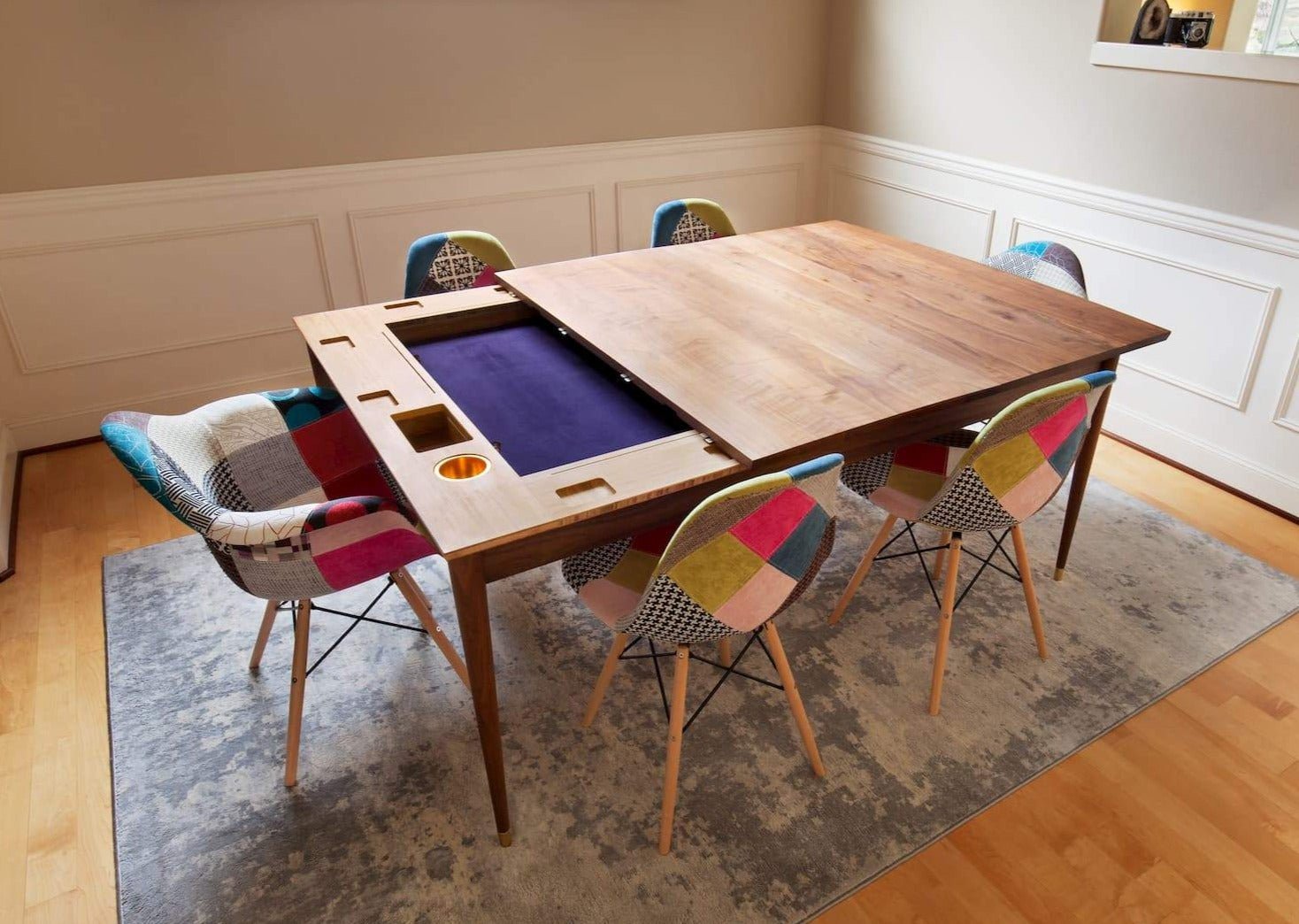
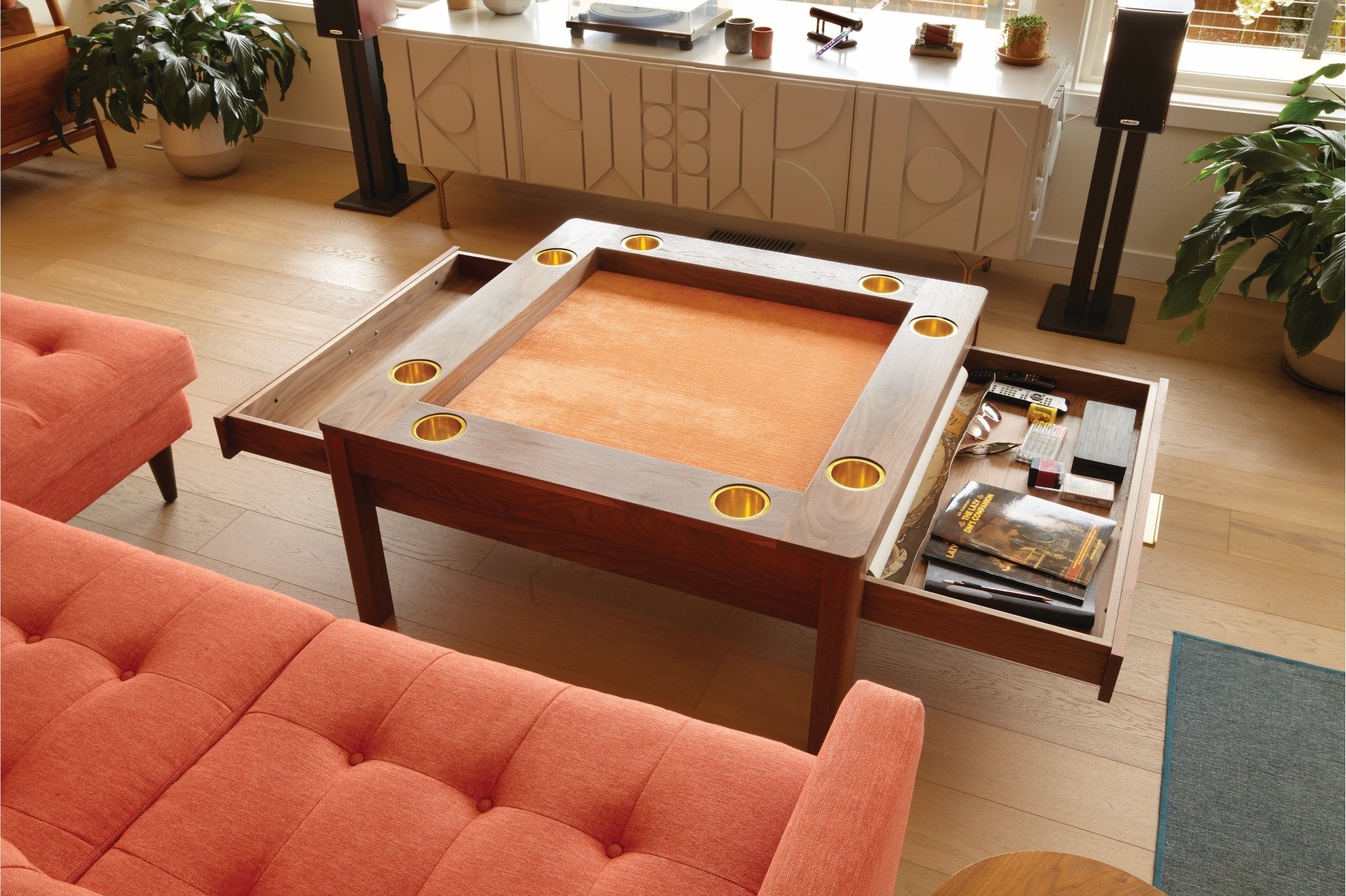
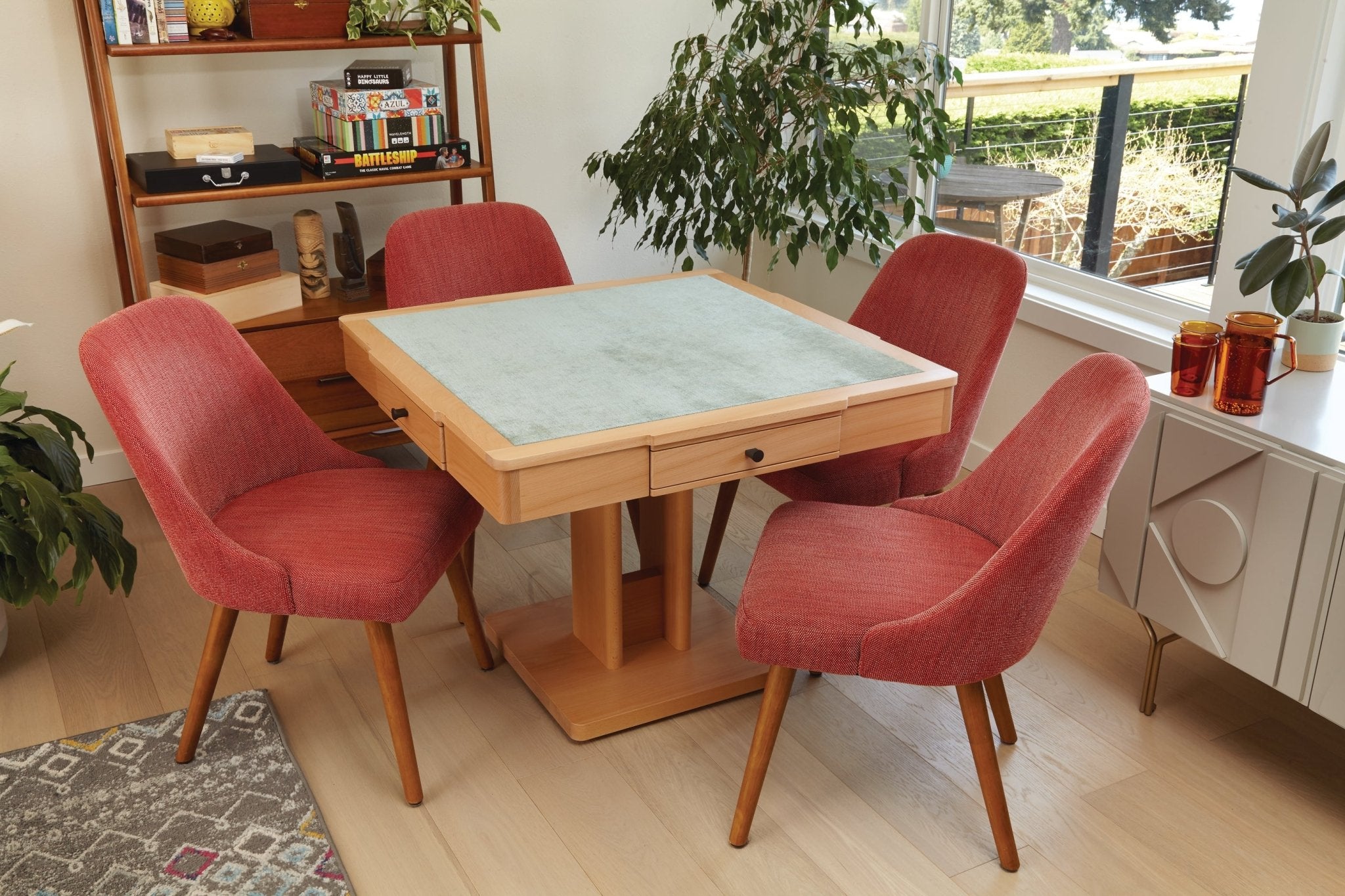
Plenty of surfaces solve this. A cleared dining table works for many games, and a card table handles a four-person card game fine. For hosts who want a dedicated solution, board game tables are built around the problem, with recessed play surfaces that keep components below the rail, built-in cup holders, and player stations.
The catch is that not everyone has room for a table that only does one thing. That’s where convertible designs come in. A piece like The Dresden is a real dining table the rest of the week, then converts for game night, which answers the host who has no spare room to dedicate.
For a living-room setup, The Firefly does the same job as a coffee table. Either is one option among several, worth knowing about if the too-small-table problem keeps coming up.
Lighting, Sound, and Comfort
Lighting does quiet work. You want it bright enough to read cards and game iconography clearly, but warm enough that the room feels relaxed rather than clinical. Overhead light plus a lamp or two usually strikes the balance.
Music should sit in the background. Queue a low playlist before guests arrive so there are no interruptions or volume arguments mid-game. Some groups turn the music down once a strategy game gets serious, and that’s fine. Ambiance is a tool here, not a requirement.
Don’t forget the room itself. A space packed with people for several hours warms up fast, so think about temperature and airflow before anyone’s sweating over the board. A subtle candle or diffuser near the entry is a nice touch for arrival, kept light enough that it doesn’t compete with the snacks.
4) Plan Food and Drinks Around Play
Food and drinks should serve the games, not fight them. The guiding principle is low-mess and one-handed. Pretzels, popcorn, and finger foods let people keep playing without greasing up the cards. Saucy dishes and anything that needs a fork and full attention are better saved for a separate sit-down.
For drinks, plan for the crowd you’ve got. Offer a couple of options, and always include a solid non-alcoholic choice so nobody feels like an afterthought. A signature cocktail is a nice flourish if you’re feeling ambitious, but it’s the non-alcoholic option that makes the whole table comfortable.
Logistics matter more than the menu. Set food and drinks on a separate surface from the play area, a side table or counter, so a spill doesn’t land on the game.
And lean on potluck or BYO. Asking guests to bring snacks or a bottle spreads the load and gives everyone a stake in the night.
5) Run the Night and Keep It Flowing
Once people arrive, the host has a live job. Orient guests as they come in: where the snacks are, where the drinks live, where the bathroom is. Then teach the first game cleanly, get the opening turn started, and let the evening find its rhythm.
Pacing is the host’s responsibility too. Read the room. If a game is dragging, gently enforce the time limit you set. If energy dips, that’s the signal to switch to something lighter rather than pushing through. Keeping things moving is most of what good hosting is.
You’ll also referee, briefly. Rules disputes happen, and the host’s job is to make a quick call and keep the game moving rather than litigating every edge case. The same goes for distractions. A phone here, a side conversation there. Nudge the table back without making it a thing.
And give yourself permission to let the night drift toward conversation. The games are the vehicle, not the destination. If a group ends up talking more than playing, that’s often the sign of a night that worked.
Avoid Common Game Night Mistakes
Most game nights that go sideways do so for predictable reasons. Knowing them ahead of time is half the fix.
-
Overcrowding the table. Packing in more players than a game allows, or more bodies than the seats and surface can hold, creates downtime and discomfort in equal measure.
-
Picking a game that’s too complex to teach. A forty-minute rules explanation stalls the night before it starts. Save the heavy title for a group that already knows it.
-
No backup plan. When a game flops and there’s nothing to swap in, the energy leaks out of the room. Always have a lighter option ready.
-
A cramped or cluttered surface. Nowhere to set a drink, no room to spread out, and the night feels claustrophobic no matter how good the company is.
-
Letting one game run too long. Without a loose time check, a single title can swallow the whole evening and leave no room for anything else.
Make Game Night a Habit
The best game nights aren’t one-offs. They’re the third Thursday of every month, the standing Friday, the thing the group quietly builds its calendar around. A few habits make a recurring group sustainable.
Rotate hosts and share the duties. When one person carries every night, that person eventually burns out, and the group fades. Passing the role around and splitting who brings what keeps it alive.
Build a small core library and a place to keep it. A handful of reliable games stored where you can grab them makes each setup faster than the last.
A set of board game shelves or a dedicated piece like The Eolian keeps the collection organized and off the floor, so getting ready for the next night takes minutes, not an afternoon.
Then build in the small rituals. A group photo, a quick recap of the night’s best moment, a running tally of who won what. These are the things that make people text you the next morning asking when the next one is.