The best gifts for board game lovers usually aren't more board games. They already buy the games they want, you can't tell what they own, and a duplicate joins the shelf of shame unplayed. So this gift guide takes a different route entirely.
You don't need to know what a euro game is to use it. If you live with a board gamer, you already know the useful part: where they play, what the table looks like mid-session, which stack of boxes keeps growing. That's worth more than any wishlist.
What Counts as a Gift That Isn't a Board Game
Good gift ideas for board gamers share one trait: they improve how someone plays. A board game lover's collection is already the crowded part of the hobby. The play experience, meaning the surface, the seating, the storage, the light over the table, is usually the neglected part.
That reframe answers the question every gift thread on BoardGameGeek circles back to: what do you buy the gamer who has everything? You buy for the session. The gifts below live in four territories: the play surface, storage and organization, table-side accessories, and hosting.
One caution on search terms. "Gifts for gamers" lists mostly cover headsets and RGB keyboards for the video game crowd. This guide is for the tabletop side of the house, the one with cardboard and dice.
How to Judge What a Board Gamer Needs
Before you buy anything, walk through a few questions. They take two minutes and they prevent most of the misses covered in the final section. Six checks:
1. Where Do They Play?
A dining table that has to be cleared for dinner, a coffee table, a dedicated game room, or someone else's house each point to different gifts.
2. What Do They Play?
Heavy strategy games with hundreds of components reward organization and table real estate. Party games barely need either.
3. Do They Host, or Do They Attend?
Hosts need seating, lighting, and snack management. Travelers need a bag that protects boxes. And how big is the board game collection? A board game enthusiast with 300 titles has different problems than a casual owner of ten.
4. Apply the Owns-It-Already Test
High-frequency board game accessories like card sleeves and basic dice are usually solved within the first year of the hobby. The furniture around the games rarely is.
Be careful with box inserts: an insert organizes the components inside one specific game's box, and most are cut for a single title and edition. A well-meant insert for the wrong printing won't fit. Generic component trays and organizers are the safer gift because they work across the whole collection.
5. Let Budget Narrow Things
Whether it's a Christmas gift, a birthday, or a housewarming, under $30 covers stocking stuffer territory: dice trays, token bowls, deck boxes. The $30 to $150 range covers organization and table-side gear. Above $150 you're into furniture and permanent changes to the room.
6. Skip the Unknowables
Anything that requires a shelf measurement you don't have, anything sized to a specific game, and anything with a strong look the recipient didn't choose. If you're stuck, check whether they keep a BGG wishlist, or ask at their local game store. A funded wishlist beats a guess.
Signals They Have an Infrastructure Problem
Some households make the diagnosis easy. Games stored in closets, under beds, or double-stacked on sagging shelves. Sessions that end early because the table is needed for dinner. Sleeved games that no longer close their own boxes.
The clearest tell is in the photos: play sessions with cards and tokens crowded to the table's edge. When you see that, the gift question stops being about accessories and starts being about the room.
Gifts That Fix the Play Surface
The surface is the most under-considered gift category, and it carries the widest price range in this guide. It also matters mechanically. A good surface controls dice, makes cards easier to pick up, keeps components visible, and lets someone stand up mid-game without a bump resetting an hour of play. Three tiers:
-
A neoprene playmat. The entry point, often under $50. It adds grip, quiets dice on hardwood, and makes flat cards liftable. What it can't add is space. A mat on a cramped table is still a cramped table.
-
A table topper or dedicated game board. The middle tier. They're portable, they protect the dining table underneath, and they work for renters who can't commit to new furniture.
-
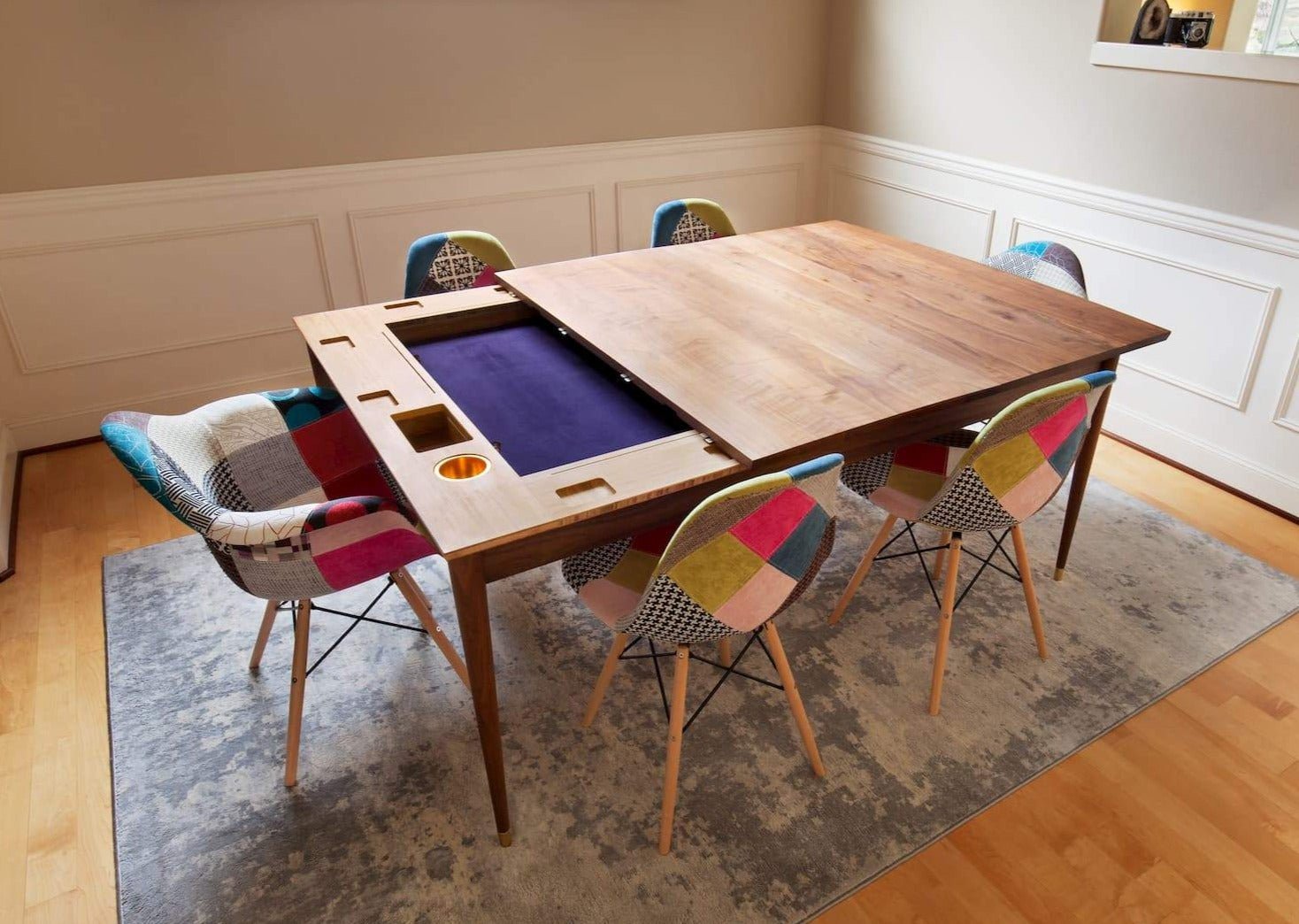
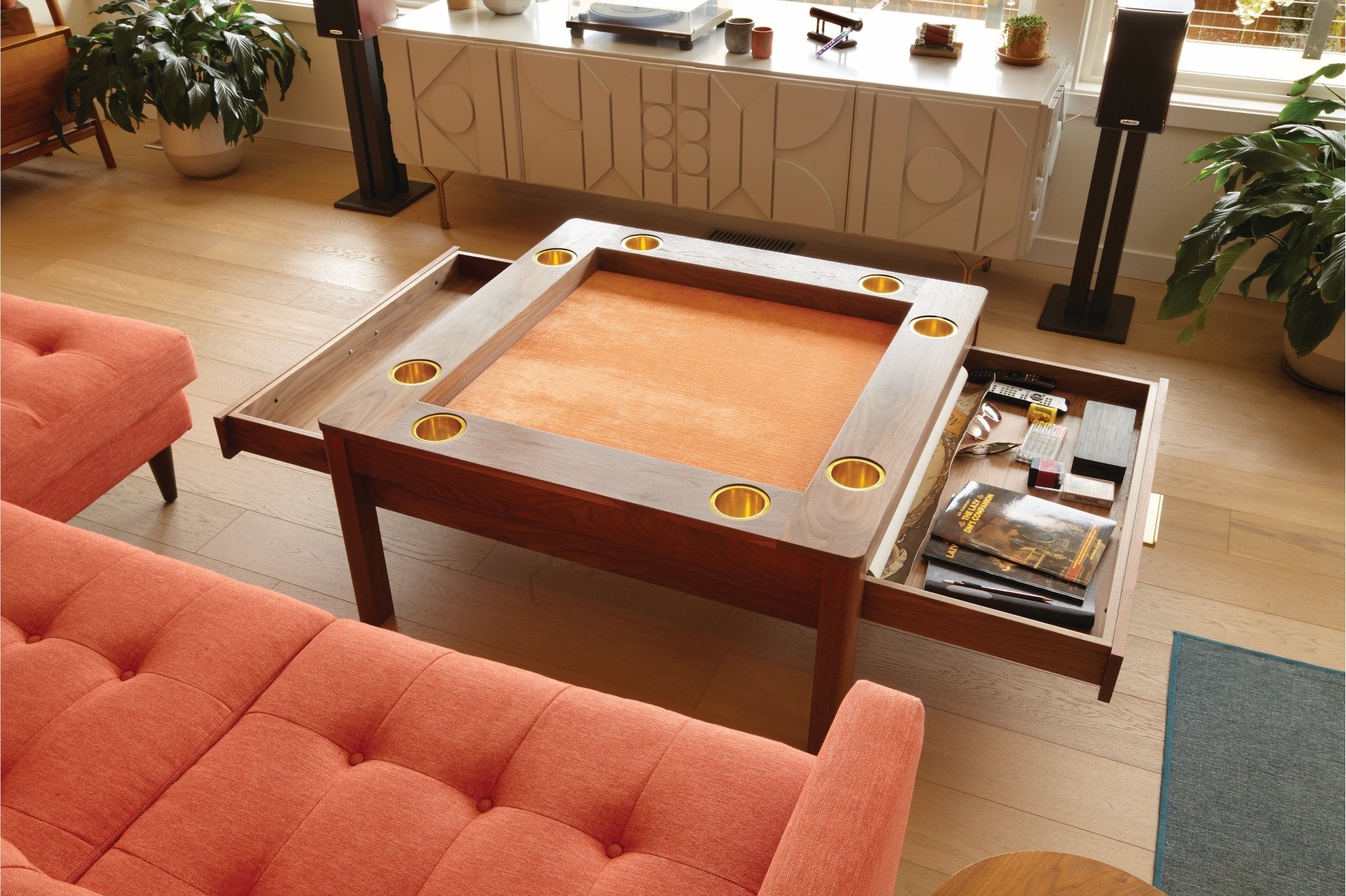
A dedicated game table. The top of the range. A recessed play surface keeps a campaign set up between sessions, and a convertible design covers the well with a topper so the same piece serves dinner the other six nights.

Our Dresden is built on exactly that idea: a solid hardwood dining table that opens into a sunken game surface. The honest tradeoffs are footprint, cost, and made-to-order lead time.
Fabric is a real variable at every tier, since felt, suede, and neoprene each change how dice roll and cards slide.
Be realistic about the top tier as a gift. A table is rarely a surprise. Furniture at this scale is a joint or milestone purchase, the kind a couple decides on together. If that conversation is live in your house, our board game table buying guide covers the decision in depth.
Storage and Organization Gifts
Storage is the most requested category among gamers themselves, and it gifts well because the need is visible from across the room. Every new game eats shelf space the room may not have.
Deep, horizontal shelving. Board game boxes stored vertically warp under their own contents, and boxes stacked too high crush the ones at the bottom. Deep, horizontal shelving solves both, and most bookshelves fail the depth test, since big-box games run close to a foot square.

Our board game shelves are built with that in mind. The Eolian runs 11 ½ inches deep with mid-century lines, the kind of shelf that puts grail games and collectibles on display in the living room instead of stacked out of sight.
A padded game bag or backpack. For someone who plays away from home, it protects boxes in transit, and box bands keep lids on. Cheap totes let corners take the damage.
Component-level organization. The safest gift in this whole guide. Bit trays, deck boxes, lidded token containers, and label systems are inexpensive, work across any collection, and are hard to duplicate because nobody feels done organizing.
Card sleeves, with one caution. Sleeves come in mini, standard, euro, and tarot sizes, and a sleeve gift without the recipient's game list is a coin flip.

The Leaf Keep, for Dresden owners. If you know they own a Dresden, the Leaf Keep is a more certain pick: it stores the table's dining leaves while the game surface is open, a problem every convertible-table owner discovers in week one.
For the bigger picture on taming a collection, our board game storage ideas post goes deeper than this section needs to.
Table-Side Accessories Worth Giving
Accessories split into the pieces that stay on the table for years and the novelty items that migrate to a drawer. Buy from the first group.
A dice tray or tower. A dice tray contains rolls and quiets the clatter, which matters more in apartments and on hard tabletops than anyone expects. A dice tower does the same while removing the throw entirely, a kindness for the friend whose rolls end up on the floor.
Nice dice sets. A real gift for RPG players, who roll constantly, and mostly redundant for board gamers, who often don't roll at all.
Group-specific table gear. Card shufflers and dealing shoes suit deck-heavy groups and card games, and sit unused otherwise. Score pads, sand timers, and turn markers are small, cheap, and beloved by any group with an analysis-paralysis player.
Component upgrades. High perceived value: metal coins with real heft, resin resource tokens, custom meeples. The catch is that they're game-specific, so treat them as a targeted gift only when you know the exact title in the collection.
Lighting. The sleeper in this category. Directional light over the table reduces glare on cards and eye strain across a four-hour session, and it changes long game nights more than people expect.

Dresden accessories, for owners. If the recipient already owns a Dresden, the accessories built for it are the easiest win on this list. The dice bin covers, for example, fit snugly over the table's built-in dice bins, closing them off to add flat space for player boards or snacks, and each one lifts out with the included magnet tool.
For a broader survey of the category, our top board game accessories roundup makes a good companion read.
Gifts for D&D Players
D&D runs on a different rhythm than board games: the same group, the same table, week after week, sometimes for years. Gifts for D&D players can lean into that. Dice are the classic for a reason, since roleplayers roll constantly and nobody in the hobby has ever owned enough sets. A dice tray or tower keeps those rolls off the character sheets.
For the person who runs the game, think about the workload. A quality DM screen, wet-erase battle maps, and miniatures or terrain for the current campaign all land well, though minis and terrain follow the same rule as component upgrades: know the campaign before you buy.
If the group plays at a Dresden, the DM Shelf is the purpose-built pick. It slides along the table and gives the Dungeon Master a raised second level for the screen, notes, and whatever the party isn't supposed to see yet.
And a group that has been improvising on a kitchen table for years sometimes pools together for the milestone version: our D&D tables keep the campaign set up between sessions and serve dinner the other six nights.
Gifts for the Person Who Hosts Game Night
Some gamers run the game group's schedule. They send the invites, clear the table, and feed everyone. Gifts for a host serve the room, and the guests, as much as the person.
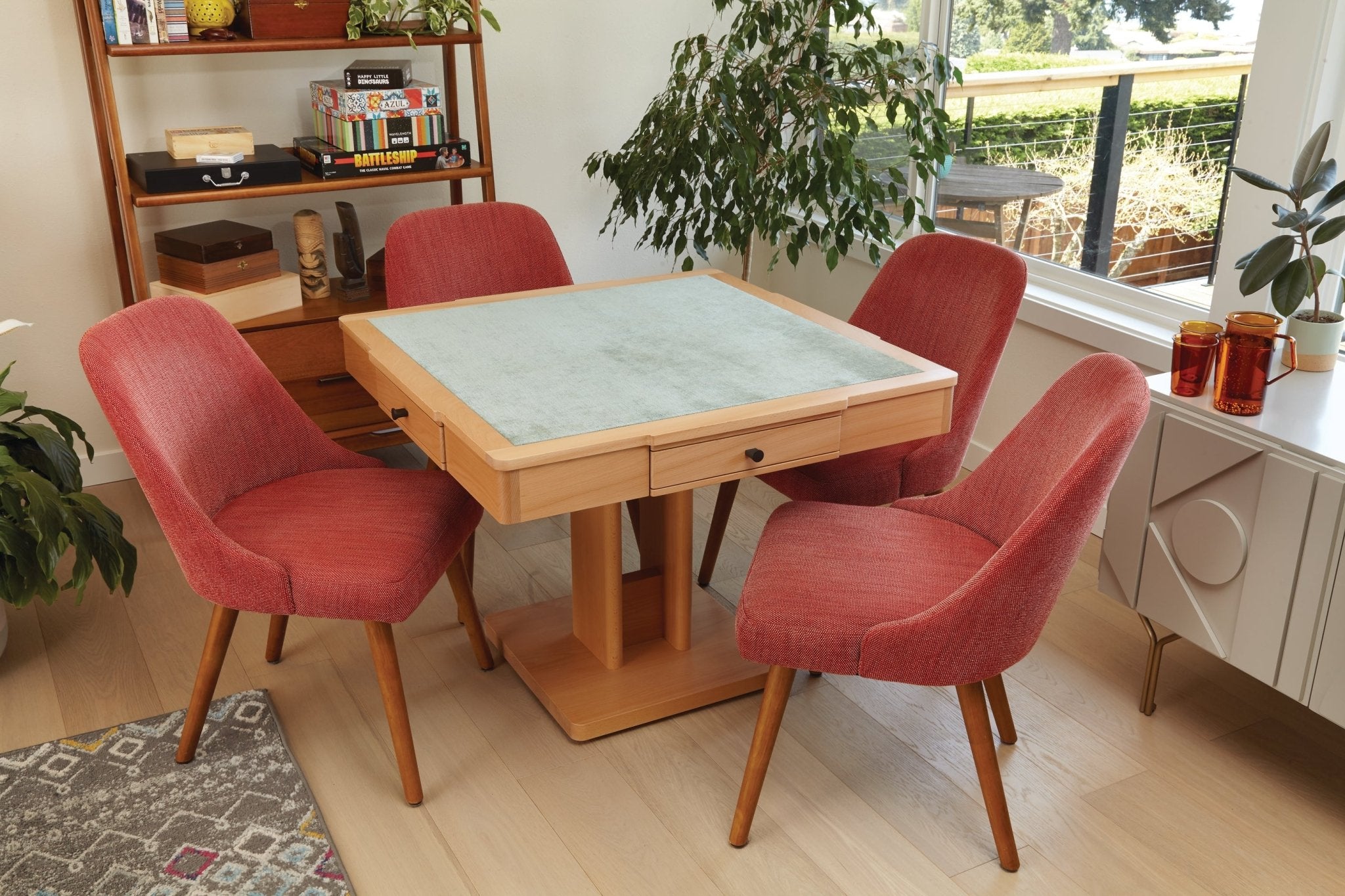
Seating is the overlooked one. A chair that works for a four-hour session needs real seat depth, arms that clear the table apron, and no swivel. One good chair is a better gift than four folding ones.
Snack and drink management sounds unglamorous until you've watched a wet glass migrate toward a $90 game. Covered vessels, a small side table, and a set of substantial coasters keep hands and components clean. Pick snacks that are dry, one-handed, and clean-fingered.
For the host who owns everything, buy the experience: a board game café gift card, a convention pass, or a game library subscription. None of it can duplicate anything on the shelf.
For frequent hosts, a permanent play surface removes the setup-and-teardown tax that eats the first and last half hour of every game night.

Matching the Gift to the Type of Gamer
No two tabletop gamers need the same thing, so match the gift to the player:
-
The heavy strategy player with 100+ games: Has an organization problem by definition. Component trays, deep shelving, or a storage overhaul will land.
-
The RPG group member: Lives at the table for long sessions. Dice, trays, and surface upgrades fit, and the D&D section above covers the rest.
-
The couple that plays two-player at a coffee table: Wants compact gear: a small mat, a card holder, good task lighting.
-
The family with young kids: Needs durability and cleanup speed over aesthetics. Lidded token containers and wipeable mats keep family game night from ending in a component hunt under the couch.
-
The apartment dweller with no dedicated space: Benefits most from things that pack away: a rollable mat, a game bag, storage that goes vertical.
-
The host who runs game night: Gets the hosting section above. When in doubt there, seating.
Common Mistakes When Buying for a Board Game Lover
The classic miss is buying a game they own, or one that repeats a mechanic they've already explored. Close behind is the mass-market trap: modern hobby games and the Monopoly aisle are different worlds, and a gamer with 200 titles has no use for a new edition of Clue.
Sizing failures come next. Sleeves, inserts, shelves, and cases bought without measurements or a game list miss more often than they hit. So do aesthetic assumptions: furniture and display pieces carry a look the recipient has to live with, which is why the big-ticket tier belongs to joint decisions.
The last mistake is novelty overload. Meeple-print socks and dice mugs are fine stocking fillers, but if the play experience has an obvious unsolved problem, solve that first.
Start With Where They Play
Every strong gift in this guide traces back to one question: what does their table look like on game night? Crowded components call for a surface fix. Sagging shelves ask for storage, and a tired host needs seating, lighting, or a night at a board game café.
Most of the best board game gifts here cost under $150 and come from the wider tabletop world. The furniture tier waits at the top for the milestone year, decided together and measured for the room. Improve the session, and the gift gets used every week for years.