Most of the confusion around buying a coffee table comes from one mix-up. People shop as if “type” is a single list, when really there are two. One sorts tables by what they do. The other sorts them by what they’re made of.
A lift-top table and a solid walnut table aren’t competing answers to the same question. A table can be both at once. Separate function from material, and the choices stop blurring together. From there, you can match the right table to your room and the way you actually live.
Coffee Table Types at a Glance
Think of coffee tables along two axes. Function covers the job the table does: storage, a surface that rises, a set that nests, a soft top you can sit on. Material and style cover what it’s built from: wood, glass, metal, stone, and the finishes that change how each looks and wears.
The sections below walk through both. A storage table can be solid oak. A convertible table can have a glass insert. The goal is fit, not a tidy category.
Types Defined by Function
Sorted by how much work the table does, here are the functional categories worth knowing before you shop.
1) Storage Coffee Tables
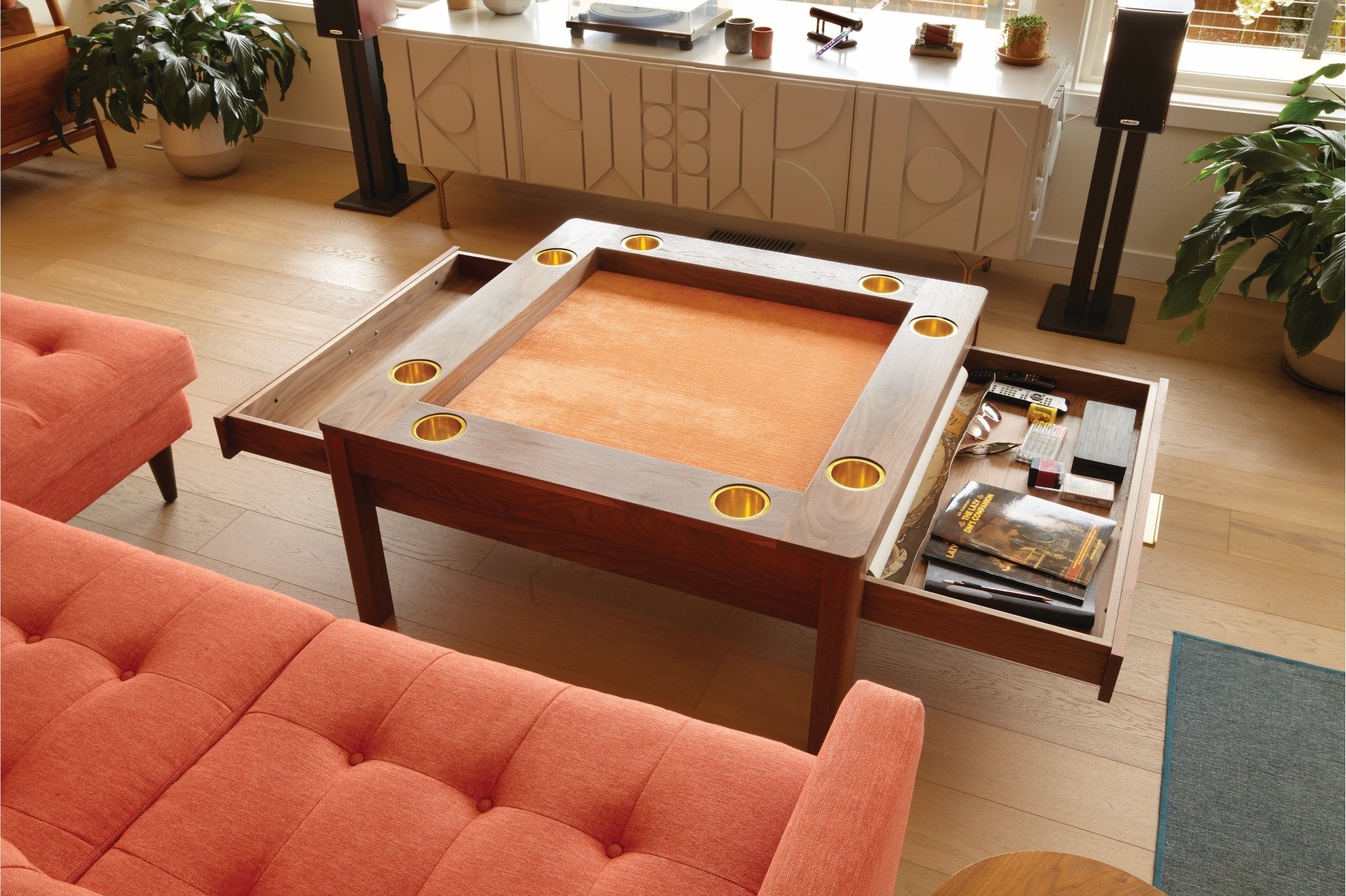
A storage coffee table hides clutter inside the footprint it already occupies. Drawers, a lower shelf, or a hidden compartment under the top hold remotes, coasters, board games, and the small chaos that collects in a living room.
The trade-off is real. Every inch given to interior storage is an inch taken from usable surface or added to the table’s weight. In a small space that trade usually pays off. In a large room you may prefer an open base and a lighter feel.
2) Lift-Top and Convertible Tables
This is the strongest space-saving category. The top raises toward you for laptop work or a casual dinner on the couch, or the whole surface transforms for another use entirely. One piece of furniture covers several jobs.
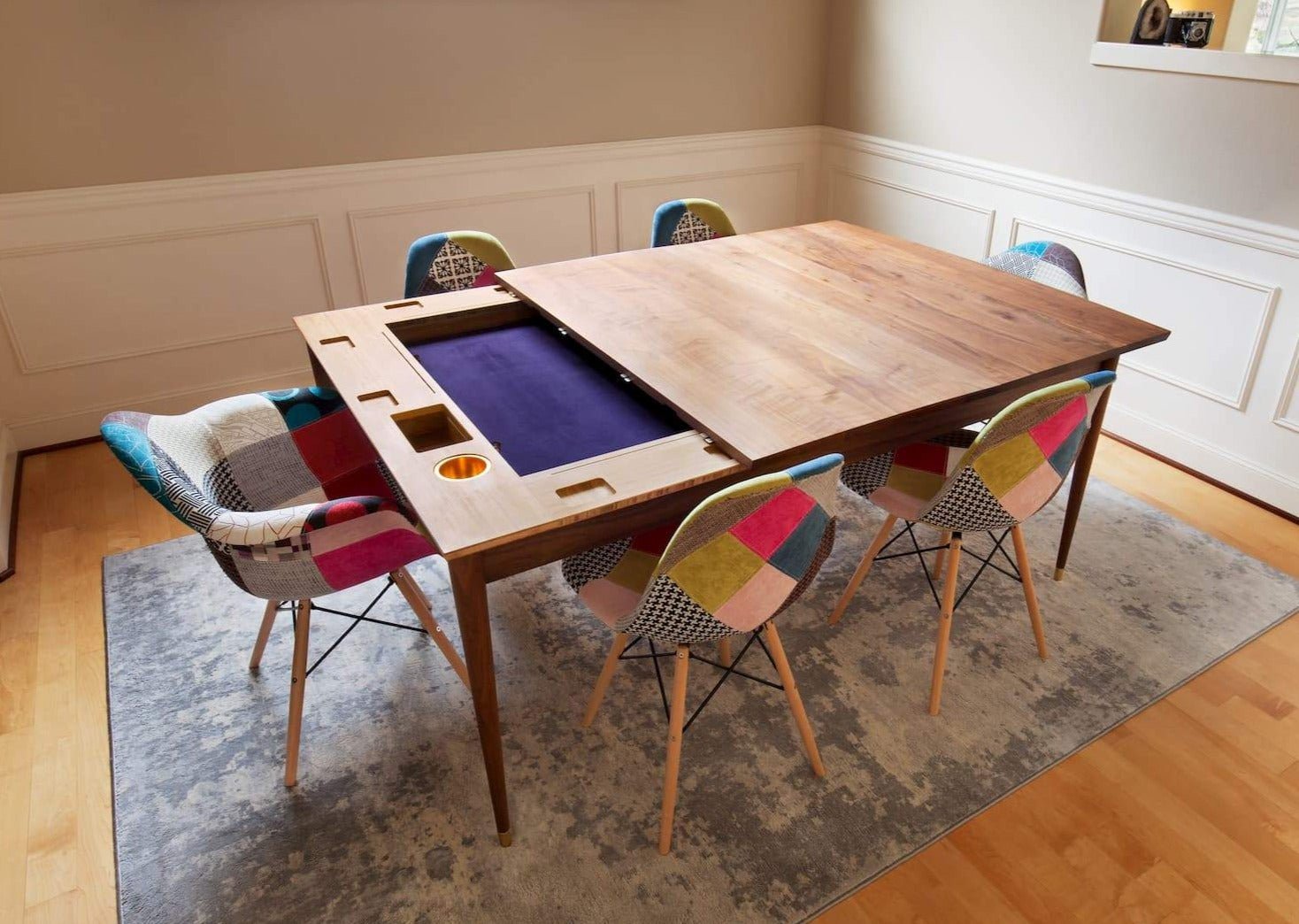
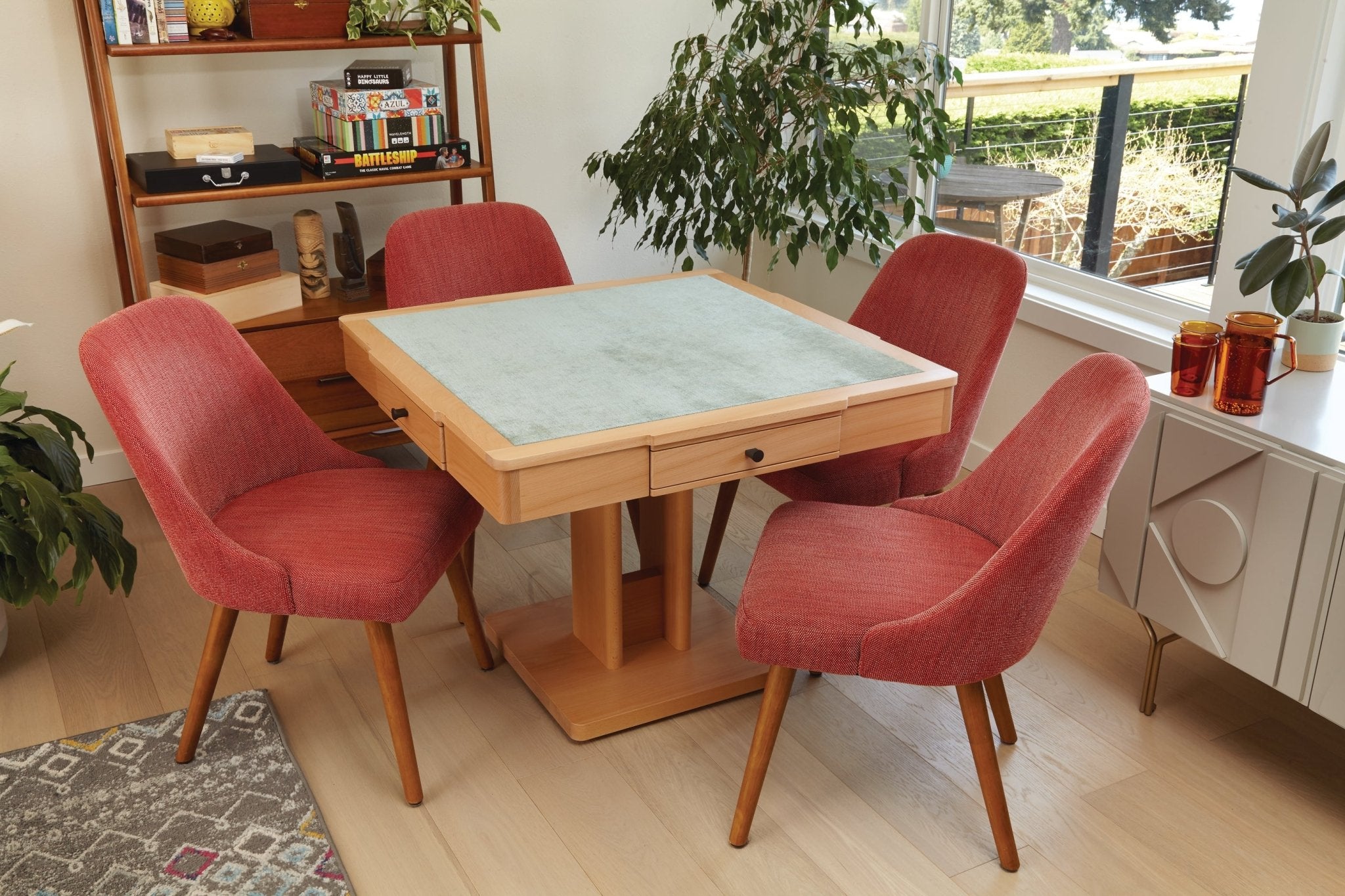
The convertible end of the category includes game-to-living designs. The Firefly is one example: a coffee table with a removable top and storage drawers underneath, so the gaming surface converts in seconds and the table reads as ordinary living-room furniture the rest of the week.
If that tradeoff interests you, see how a gaming coffee table compares with a traditional one. The lesson generalizes. A good convertible hides its second life until you need it.
3) Nesting Coffee Tables
Nesting tables come as a set of two or three that stack or slide under one another. Pull them apart when guests arrive, tuck them back when you want the floor space. They suit flexible rooms and small layouts where furniture has to move.
A single fixed table is simpler when your layout rarely changes. Nesting pays off when the room does double duty or hosts often.
4) Ottoman Coffee Tables
An ottoman coffee table is upholstered on top, so it works as a footrest, extra seating, or a soft landing for a room with kids. Many include interior storage under the lid.
The catch is the surface. A padded top won’t hold a glass steadily, so plan on a tray for drinks and décor. That one addition turns the limitation into a non-issue.
5) Outdoor Coffee Tables
Outdoor coffee tables use weather-resistant materials and finishes built to take sun, rain, and temperature swings. They anchor a patio seating area the way an indoor table anchors a living room. If your social space extends past the back door, this is the category to look at. Indoors, it isn’t the deciding factor.
Types Defined by Material and Style
Material drives two things at once: how a table looks, and how much maintenance it asks of you. This is the section to slow down on, because the surface you choose is the one you live with every day.
Solid Wood Tables
Solid wood is the warm, timeless option, and the one most likely to outlast the room it started in. A solid hardwood table can be sanded and refinished rather than replaced, which is the heart of the heirloom case. A scratch is a repair, not a death sentence.
Species matters more than most shoppers expect. Bandpass builds in walnut, cherry, white oak, and maple, and each changes the result. Walnut runs dark and rich with chocolate tones. White oak is paler, harder, and shows a pronounced grain. Maple is light and tight-grained for a cleaner modern look. Cherry starts warm and deepens with age.
Hardness affects daily durability too. White oak and maple shrug off dings better than softer woods, which matters in a house with kids or heavy use.
Live Edge Tables
A live edge table keeps the natural contour of the tree along one or both sides, so the grain and shape are one of a kind. It pairs with most interiors because the organic edge reads as a natural accent rather than a fixed style.
One clarification: live edge is a wood finish and styling choice, not a separate construction. Underneath, it’s still a solid wood table and carries the same durability and repairability.
Glass-Top Tables
A glass top feels light and open, which helps a small living room keep its sight lines. Spills wipe off, and the surface never stains. In a tight space, the see-through top makes the room read larger than a solid mass would.
The trade-offs are fingerprints, the constant smudge of daily use, and child safety around edges and corners. Wood- or metal-edged glass tops soften that risk by wrapping the vulnerable edge. Tempered glass also addresses the durability worry directly, since it resists breakage far better than the flimsy reputation suggests.
Antique and Vintage Tables
An antique or vintage table brings character and patina that new furniture can’t fake. The cost is upkeep. Older finishes want regular polishing, and many pieces are sensitive to humidity swings that can crack or warp the wood.
These tables suit traditional and eclectic rooms where age is part of the look. In a modern, low-maintenance home, the care requirements may outweigh the charm.
Metal and Mixed-Material Tables
Metal tables lean industrial or modern, with stainless steel, brass, or a powder-coated frame doing the visual work. They’re durable and often heavy, which keeps them planted but makes rearranging a chore.
The most common version pairs a metal frame with a wood or glass top. That mix gives you the warmth or openness of the top with the structure of a metal base, and it sits comfortably in a lot of contemporary rooms.
How to Choose the Right Coffee Table
This is where the topic turns into a decision, and where a closer look at choosing a coffee table pays off. Four questions sort most of it: how big, what shape, what material, and how much the table should do.
1) Match the Table to Your Room Size and Layout
Start with proportion. A coffee table should run about two-thirds the length of your sofa. Leave roughly 16 to 18 inches of walking clearance between the table and the seating so the path stays open. Height should land near the seat cushion level, give or take an inch, so the surface is easy to reach.
Layout changes the math. A sectional wants a table that serves the full seating angle, not one cushion. A living-and-dining combo favors a smaller footprint that doesn’t crowd the second function. A tight room rewards a table that leaves the walkways clear.
2) Choose a Shape That Fits Your Space
Shape follows traffic flow and seating more than looks. A rectangular table suits a long sofa or a sectional, since it mirrors the seating line. A round or oval table fits tight rooms and high-traffic paths, and the absence of corners is safer in a home with young kids.
A square table balances a conversational arrangement where seating faces inward from several sides.
The popular assumption that round always means small-space-friendly doesn’t hold. It depends on the sofa shape and the negative space around the table.
3) Weigh Material Against Lifestyle
Material is a lifestyle decision before it’s an aesthetic one. Run it against your real conditions: kids, pets, how often drinks get spilled, how much upkeep you’ll tolerate, and whether the table lives outdoors.
A few common situations map cleanly. Glass resists spills and stains but raises the child-safety question at the edges. Solid wood is durable and repairable but appreciates an occasional refinish. Upholstered tops are soft and family-friendly but need a tray for drinks. Outdoor use rules out anything that isn’t built for weather.
4) Decide How Much the Table Should Do
The last question is range. A single-purpose surface is simple, light, and usually cheaper. A storage table adds capacity. A convertible table does the most jobs and saves the most space.
The do-everything end has honest costs. More function usually means more weight, more mechanism, and a higher price. A piece like The Firefly sits at the multi-use end, and it answers a specific need: a living-room table that also gives you a real gaming surface without dedicating a room to it.
If your needs are simpler, a simpler table serves you better. Buy the function you’ll actually use.
Coffee Table FAQs
A few questions come up right before the purchase that the sections above touch but don’t isolate.
What shape coffee table works best with a sectional?
A rectangular or longer oval table works best, since it follows the seating line of the sectional. Match the table length to the longest run of the sofa, and favor rounded edges if the sectional wraps a high-traffic path.
What size coffee table do I need?
Aim for about two-thirds the length of your sofa, leave 16 to 18 inches of clearance for walking, and keep the height near the seat cushion level. Those three rules cover most rooms.
Which coffee table styles are most popular right now?
Convertible and storage tables draw steady interest for small and multi-use spaces, alongside clean, minimalist looks in wood, metal, and glass. Personal style outlasts any trend, so weigh longevity over what’s current this season.
The Bottom Line
The fastest way to choose a coffee table is to stop treating “type” as one list. Decide what you need the table to do, then decide what you want it made of. Those two questions, run against your room size and your daily life, narrow the field faster than any style label.
If you remember one rule, make it proportion: two-thirds the sofa, 16 to 18 inches of clearance, height near the cushion. Get that right, pick a material you’ll live happily with, and the table will hold its place in the room long after the trends that surround it have moved on.