If you have ever watched a pile of dice rocket off the edge of a coffee table, or tried to keep a multi-hour strategy game safe from drinks and dinner plans, you already understand why so many board game enthusiasts look into board game furniture.
A common question comes up fast: why are board game tables recessed? Is a lowered play area just for show, or does it serve a real purpose? A recessed gaming table is designed to keep the game contained, protect the setup, and make it easier to pause and return to play without starting over.
This guide breaks down how recessed game tables work, where the feature helps most, when a simpler flat surface may be enough, and which table style fits different homes.
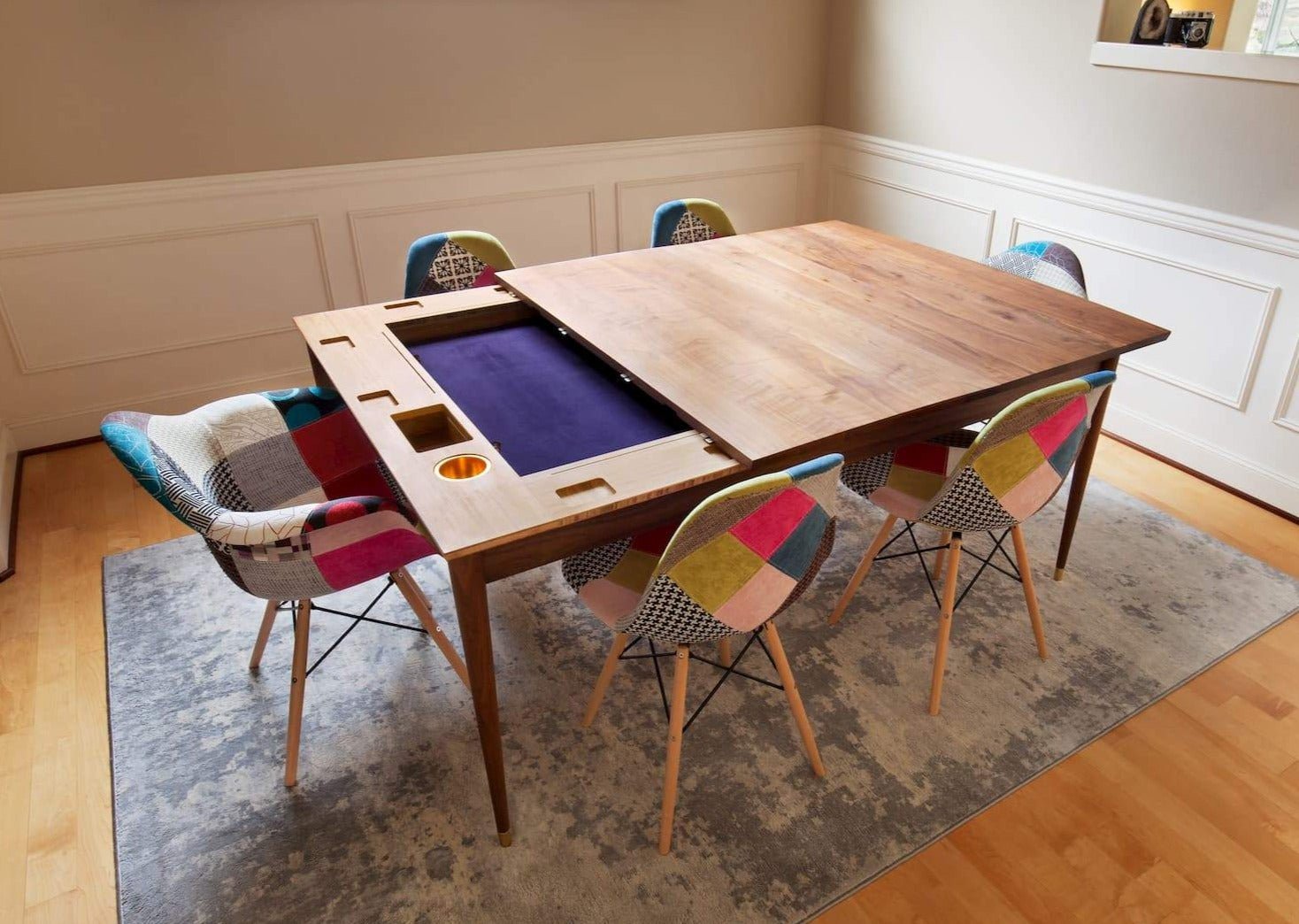
Bandpass Design uses this feature in both dining room and living room formats, including The Dresden and The Firefly. These tables are built to be more useful day to day, not to look like game room props.
What Is A Recessed Game Table?
A recessed game table has a lowered playing surface set below the outer tabletop edge, creating a contained game vault for cards, dice, boards, miniatures, and game components.
That means the game sits inside the table, not just on top of it. Instead of balancing pieces on a flat surface that shares space with plates, drinks, or pet paws, the game has a dedicated area that stays more protected while people play.
The essential parts usually include:
-
Outer tabletop or ledge: The framed border around the lowered playing area. It may include player stations, cup holders, card slots, or space for personal items.
-
Recessed playing surface: The lowered surface where the game is played. This may use felt, speed cloth, neoprene, upholstery, or another game-friendly material.
-
Game vault: The contained space beneath the outer rim where the game setup can stay during play or between sessions.
-
Removable dining topper or table topper: A hard surface that covers the game vault so the table can return to dining, work, crafts, or daily use.
-
Player stations or accessory areas: Built-in spaces for drinks, cards, tokens, dice, notebooks, or other small items.
Table Toppers Vs. Recessed Surfaces
A topper and a recessed surface are related, but they are not the same feature.
-
A topper is the removable hard surface that covers the game vault.
-
The recess is the lowered play area underneath.
Many premium board game tables combine both. The recessed area gives games a protected place to live, while the topper lets the table return to a normal dining or daily-use surface when the game is covered.
Real-World Examples From Bandpass

The Dresden board game dining table is Bandpass Design’s dining-height example. It features a recessed game vault, removable dining leaves, player stations, cup holders, dice bins, and customizable hardwood options. It is built for homes where the dining table also needs to support longer game nights, family meals, puzzles, and hosting.
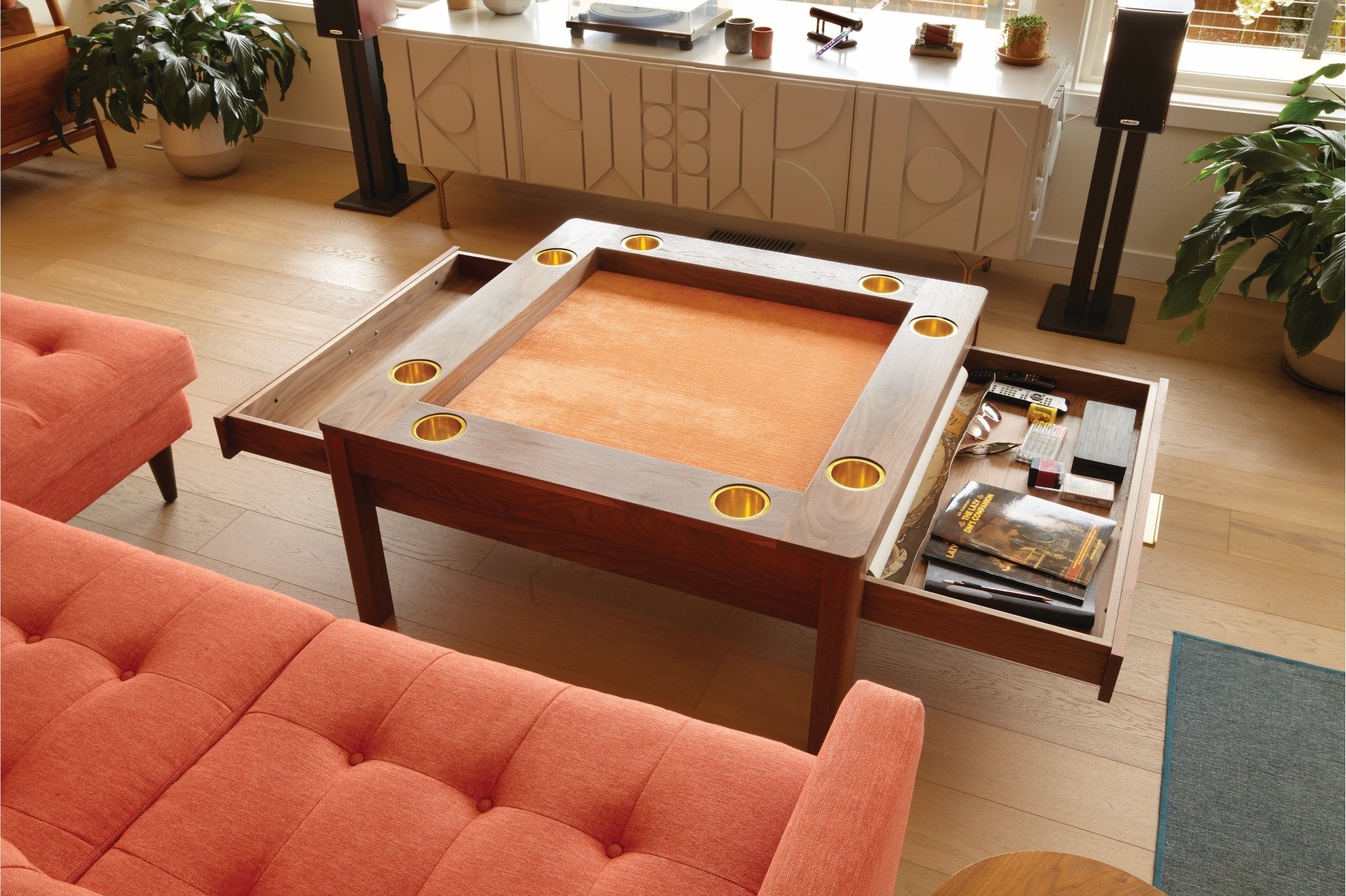
The Firefly applies the same recessed-table idea to a living room format, with a contained play surface, soft-close drawers, built-in cup holders, and a removable top that keeps the table looking like finished furniture when the game is covered.
Why Are Board Game Tables Recessed?
There is a practical reason behind every sunken play area you see in modern gaming tables. The sunken play area changes how games are stored, protected, paused, and played.
To Pause Games Without Packing Everything Away
The biggest advantage is simple: a recessed game table lets players leave a game set up and cover it until they are ready to play again.
Long RPG sessions, strategy games, puzzles, and campaign games often do not fit neatly back into the box between sessions. Dungeons & Dragons may involve maps, dice, miniatures, books, and character sheets. Gloomhaven, Frosthaven, or Pandemic Legacy may involve dozens of pieces that take time to organize.
A recessed play area helps because cards, boards, tokens, and pieces stay inside the vault. Once the topper or dining leaves go back on, the same table can be used for dinner, work, or daily life.
The Dresden shows this versatility well. Its recessed vault and removable dining leaves allow the table to move between dinner and gameplay without clearing the entire setup every time.
For more context on how this differs from a standard table, see Bandpass Design’s guide to a board game dining table vs traditional dining table.
To Keep Dice And Components Contained
Recessed walls act as a barrier. They help stop rolling dice, runaway tokens, loose cards, and small game components from falling off the table.
This matters most when:
-
Dice are being rolled during RPGs
-
Cards are sliding during card games
-
Kids are reaching across the table
-
Pets are nearby
-
Drinks, snacks, and game pieces are all sharing space

In the living room, the Firefly gaming coffee table is a strong example. Its 2.5" recessed gaming area and built-in cup holders help keep dice, cards, and drinks in their own zones during couch-based game nights.
To Create A Better Playing Surface
A recessed area is often paired with a surface that feels better for gameplay than a standard tabletop.
Common gaming surface materials include:
-
Felt
-
Speed cloth
-
Neoprene
-
Upholstered fabric
-
Moisture-resistant fabric
These materials can make cards easier to pick up, dice easier to roll, and pieces easier to move. They also help visually separate the game area from the rest of the table.
The Firefly uses Knoll moisture-resistant fabric, which supports smoother gameplay while helping protect against spills. The Dresden includes a double-sided gaming inset with stretch velveteen on one side and casino-grade speed cloth on the other, giving players two different surface options depending on the game.
Not every game needs a specialty surface, but it can make a noticeable difference for cards, dice, puzzles, tiles, and longer play sessions.
To Separate Drinks From The Game Area
A recessed game table helps keep drinks, snacks, and game components in separate zones, which reduces the chance of spills landing on cards, boards, or tiles.
Premium recessed tables often include:
-
Ledges
-
Cup holders
-
Chit trays
-
Card slots
-
Dice bins
-
Player stations
These details reduce interruptions. When each player has a place for their drink, cards, counters, or dice, the main board stays clearer and easier to play on.
The Dresden’s player stations include cup holders, chit or counter holders, card slots, and access to dice bins. The Firefly follows the same logic in coffee table form, with eight built-in cup holders for living room game nights.
To Make One Table Work For More Than One Use
For most homes, space is valuable. A recessed game table makes sense because it allows one table to do more than one job.
This is useful for:
-
Small apartments
-
Dining rooms used for more than meals
-
Living rooms where the coffee table also supports games and puzzles
-
Families without a dedicated game room
-
Homes where furniture needs to feel polished every day, not just on game night
Bandpass Design approaches this through different formats. The Dresden works as a dining room centerpiece that can shift into a game table. The Firefly works as a living room coffee table that can become a protected play surface.
For homeowners comparing room setup and table function, this guide to a dedicated game room table vs convertible dining game table offers a helpful next step.
Are Recessed Game Tables Worth It?
Not everyone needs a dedicated gaming table. A recessed table is most useful when it solves a real problem in the home.
It can be worth it for:
-
Frequent board game players who want faster setup and cleanup
-
Families that want to pause games across meals
-
RPG groups that leave campaigns set up
-
Puzzle lovers who do not want to pack everything away
-
Households that want one table for life and gaming
It may not be essential for people who only play quick games occasionally, prefer a completely flat surface, or do not need to pause games between sessions.
Can’t You Just Use A Felt Mat?
A felt or neoprene mat can absolutely help. It adds comfort, cushions cards, and can be rolled up when not in use. For casual play, that may be enough.
But a mat alone cannot:
-
Keep dice from rolling off the table
-
Protect a paused game under a topper
-
Add built-in cup holders or player stations
-
Create a true game vault
-
Keep game components contained when the table is bumped
A mat improves the surface. A recessed gaming table changes the way the entire table functions.
Does Reaching Down Feel Awkward?
It can, especially for shorter players, young kids, or tables with a very deep recess.
This is why depth, seat height, and table height matter. A coffee-height table should be comfortable from a sofa. A dining-height table should work with standard chairs. The recess should feel useful, not like a hole players have to lean into all night.
The best fix is not always choosing the deepest vault. It is choosing the right table format for the way the room is actually used.
Is It Too Expensive For A Table With A Hole?
It is fair to question the price. From a distance, a recessed game table can look like a standard table with a lowered center. The difference is in the construction, materials, hardware, and how the table functions in daily use.
Higher-quality recessed tables may include:
-
Solid wood construction
-
Finished dining covers or removable toppers
-
Durable gaming surfaces
-
Engineered game vaults
-
Custom sizing
-
Player stations
-
Drawers
-
Cup holders
-
Dice bins
-
Storage accessories
For occasional players, the price may not make sense. For regular players, families, and hosts, the value often comes from time saved, fewer interruptions, and a table that supports both everyday life and gaming.
For a closer comparison, see Bandpass Design’s breakdown of recessed gaming tables vs flat top gaming tables.
Recessed Coffee Table or Dining Table?
The right choice depends on the room, seating style, and games played most often.

Choose A Recessed Coffee Table If
A recessed coffee table makes sense when the living room is the main game space.
This is the better fit if:
-
The table will sit in front of a couch
-
Game nights are casual and relaxed
-
The household plays card games, puzzles, mahjong, tile games, or compact board games
-
Hidden storage is useful
-
The room should still look like a living room when the game is covered
The Firefly fits this use case well. It has a 30" × 30" play area, 2.5" recess, two soft-close drawers, eight cup holders, and an easy-to-remove top.

Choose A Recessed Dining Table If
A recessed dining table makes sense when the dining room is also the main gathering and game space.
This is the better fit if:
-
The table will be used for meals and game nights
-
The group uses full-height dining chairs
-
The household plays larger board games, strategy games, RPGs, or campaign games
-
The table needs to support hosting, homework, meals, and recreation
-
A larger game vault is important
The Dresden fits this use case well. It is dining height, includes removable dining leaves, and has player stations, dice bins, card holders, cup holders, and customizable sizing. Its game vault is 3 1/4" deep across the Standard, XL, and Battleground sizes, giving larger games and paused setups more room than a typical coffee table format.
For a deeper brand comparison, visit Bandpass Design’s Dresden vs Uniquely Geek dining tables guide.
Choose A Smaller Specialty Game Table If
A smaller specialty table makes sense when the main games are more focused and compact.
This is the better fit if:
-
The household plays four-player card games
-
Mahjong, dominoes, or puzzles are common
-
The room is tight
-
The table needs to fold away when not in use
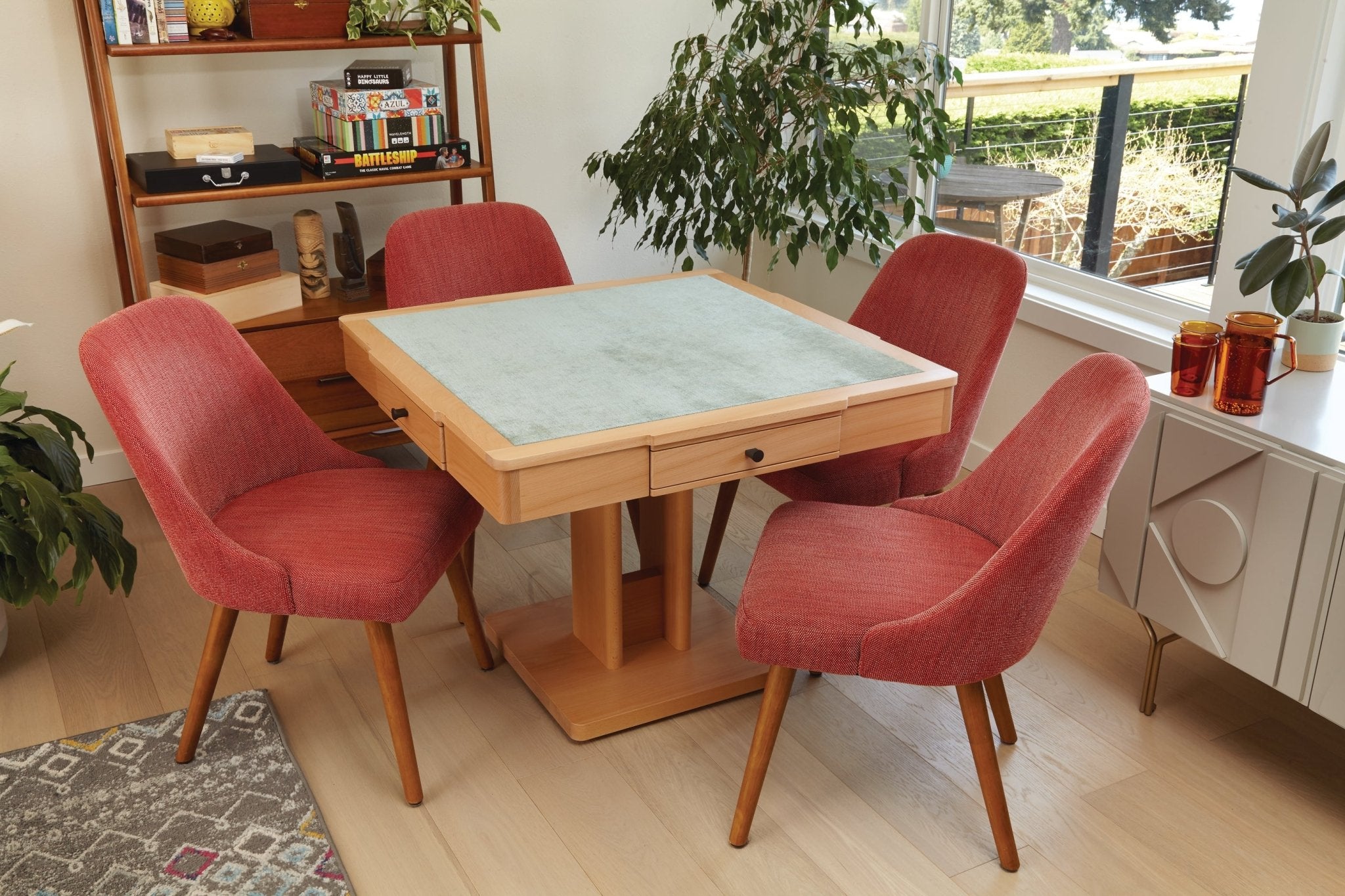
The Mimosa wooden card table fits this use case. It has a 32.5" × 32.5" upholstered gaming area, built-in cup holders, drawers with hinged desktops, and sturdy folding steel legs for easier storage.
For other flexible setup ideas, see Bandpass Design’s guide to dining table alternatives.
How Deep Should A Recessed Game Table Be?
The ideal recess for most board game tables is 2" to 2.5" for everyday play and 3" to 4" for larger games, RPGs, maps, terrain, or miniatures.
Depth affects:
-
What game components fit under the topper
-
How easy it is to reach the playing surface
-
Whether tall pieces can stay in place
-
How naturally the table returns to dining or daily use
-
Whether kids or shorter players can play comfortably
The Firefly offers a 2.5" recess, which helps contain dice and cards while staying comfortable for couch-height play.
The Dresden’s 3 1/4" game vault gives more room for larger boards, cards, dice, and paused game setups, making it better suited for dining room game nights and longer sessions.
The deepest option is not always the best one. A good recessed game table should balance depth, comfort, seat height, and the kinds of games most often played.
What Size Table Is Good For Board Games?
When planning a gaming space, focus on the actual playing surface, not just the full table footprint.
Use these size benchmarks:
-
30" × 30": Best for living room games, card games, puzzles, casual games, and compact board games.
-
36" × 60": Better for many 4 to 6 player board games and broader setups.
-
5' × 3' or larger: Better for wargames, strategy games, RPGs, and campaign games that need more table space.
Compare:
-
Inside gaming area
-
Seating capacity
-
Reach distance
-
Chair or couch height
-
Game types played most often
-
Whether the table needs to support meals or daily use
Bandpass examples make the difference easier to picture:
-
Firefly: compact living room play with a 30" × 30" gaming area
-
Dresden Standard: generous dining-height play for family and group board games
-
Dresden XL and Battleground: larger formats for bigger groups, larger games, and more dedicated gaming setups
For more sizes and options, explore the family game table collection.
FAQs
Why Are Board Game Tables Recessed?
Board game tables are recessed to keep game components contained, create a dedicated playing area, allow games to be paused under a topper, and separate the gaming surface from drinks, snacks, and daily table use.
How Deep Is A Gaming Table?
Most recessed gaming tables range from 2" to 4" deep. A 2" to 2.5" recess works well for casual games and cards, while 3" to 4" is better for miniatures, RPGs, and paused campaigns.
What Size Table Is Good For Board Games?
A 30" × 30" surface works for casual games, card games, and puzzles. Many group board games play better around 36" × 60", while strategy games and wargames may need 5' × 3' or more.
Are Recessed Gaming Tables Worth It?
Recessed gaming tables are worth it for frequent players, families, RPG groups, and puzzle lovers who want faster setup, better containment, and easier pause-and-resume play. Occasional players who only need a flat surface may not need the feature.
Can You Eat Dinner On A Recessed Game Table?
Yes, if the table includes a solid topper or removable dining leaves. The cover creates a standard dining or work surface while the game stays protected underneath.
Do Recessed Tables Work For D&D?
Yes. Dining-height recessed tables are especially useful for D&D because they offer room for maps, dice, books, character sheets, and miniatures. Coffee table options can work for casual or shorter sessions.
Are Recessed Tables Hard To Clean?
They require a little more attention than flat tables because debris can collect in the vault. Removable toppers, accessible corners, and durable gaming surfaces make cleaning easier.
Can Kids Use A Recessed Table Comfortably?
Yes, but comfort depends on table height, recess depth, and seat height. Shallower recesses are usually easier for younger kids, while deeper vaults may be better for older players and larger games.
Final Recommendation
Board game tables are recessed for a reason. The lowered play area keeps components contained, makes it easier to pause for meals or daily life, and protects the setup so players can return to the game without rebuilding everything from scratch.
This feature makes the most sense for active players, families, hosts, puzzle lovers, and anyone who wants one table to serve both everyday use and game night.
Which format fits depends on the room, but the recessed design earns its keep across coffee, dining, and card-table formats alike.
For a deeper dive into coffee-table formats, read the board game coffee table buyers guide.
With Bandpass Design, a recessed game table is meant to make the table easier to use and easier to come back to in the rooms where people already gather.