If you've ever set up a folding table for poker night and watched a drink tip onto the cards, you already know what a real playing card table is for.
The cards need a surface that deals clean and plays comfortable, and the table needs to look right in your home the rest of the week. A good one does both.
We build tables for exactly that situation, so we've spent a lot of time thinking about what makes a card table work.
This guide walks you through the decisions that matter: the size and shape, the playing surface, the features you'll use most, and whether you want a dedicated card table or one that converts for dinner. Our board game tables collection shows the range as you read.
Types of Playing Card Tables
A purpose-built card table is designed around the playing surface. The fabric is picked for how cards slide across it, the size is matched to the games you play, and the height keeps your forearms comfortable through a long session.
You can play cards on a folding utility table or your dining table, but you'll feel the difference the moment you sit down at one built for it.
Most people are choosing between three kinds:
-
Folding card tables: Light, inexpensive, and made to store away. If you're tight on space and play once in a while, this is probably your table.
-
Dedicated fixed card tables: Heavier, steadier, with a real playing surface that's always ready to go.
-
Convertible tables: A card table underneath, a dining or coffee table the rest of the week.
Your home usually decides for you. If there's no spare corner, a folding table that tucks into a closet makes sense. If you have a den or a basement to give it, a fixed table can stay set up.
And if you're working with a shared dining room, a table that converts is where things get interesting, which we'll come back to.
How Shape and Player Count Affect the Table You Need
Shape changes how people sit and which games feel right. Player count changes how big the table has to be. Both matter, and getting either one wrong leaves you cramped or stuck with a table too big for the room.
Matching Shape to How You Play
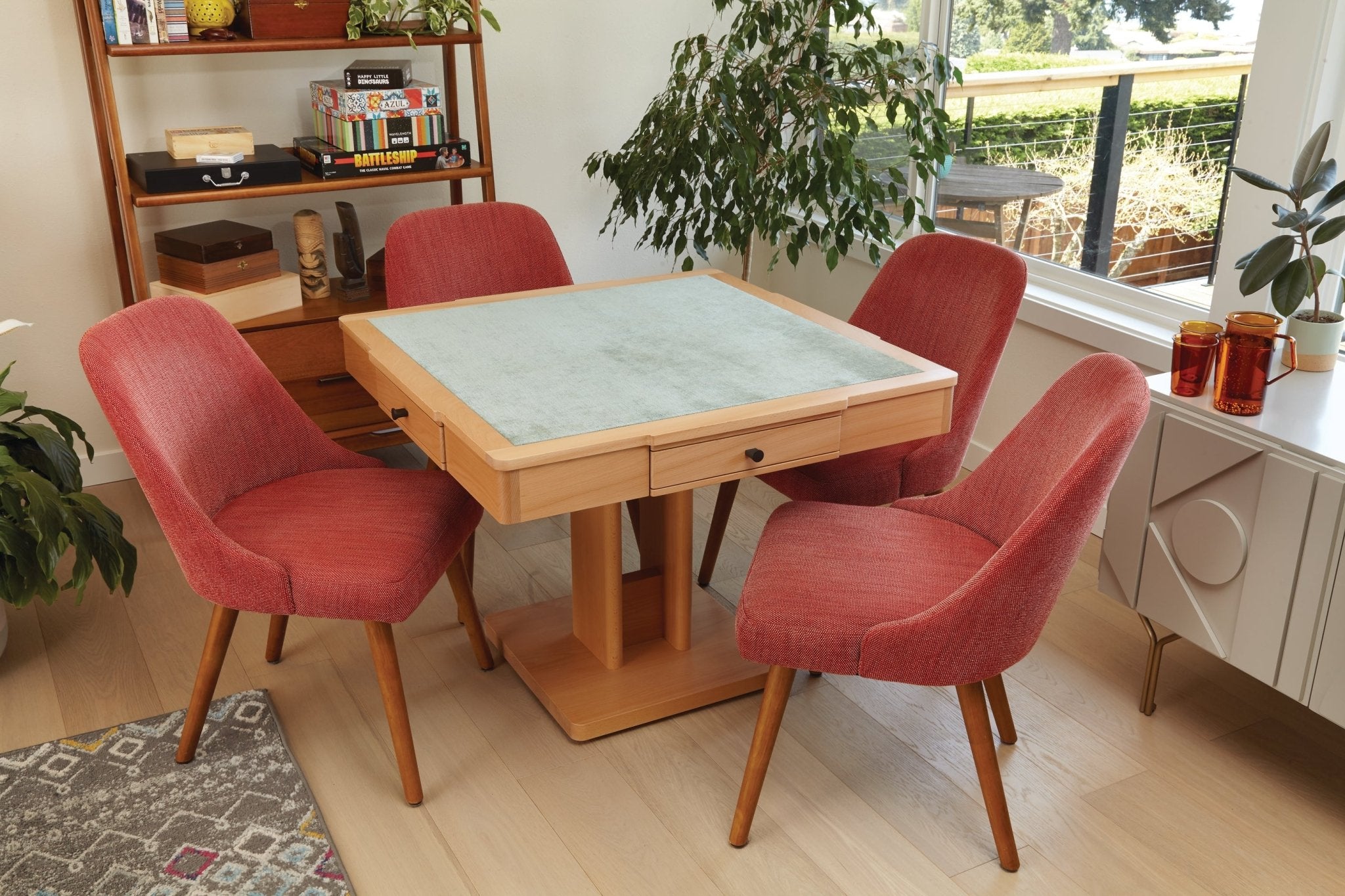
Round and octagonal tables give everyone the same view of the middle, which is why most poker tables are built that way. A square table seats four without any wasted space and fits a tight room, so it's a natural for bridge, euchre, and most tile games.
A rectangular table seats the most people and looks like a dining table, which is the one you want if it has to handle dinner too.
How Much Room Each Player Needs
Plan on about 24 inches of width per person. That's enough elbow room to hold your cards without bumping the player next to you. A 48-inch round seats four to six for cards. An 84-inch oval or an 8-foot rectangular table will seat eight with room left for a dealer.
Tile games want more room than card games do. If you play mahjong or rummikub, everyone keeps a row of tiles in front of them, so build in more depth per seat than you'd need for a poker hand. And leave yourself at least three feet around the table so chairs pull out without hitting the wall.
We sized our own card table, the Mimosa, to fit a den or a nook rather than a full dining room. That smaller footprint is the trade you make with a dedicated card table: it does one thing well, in a space where a big dining table would feel like too much.

Choosing the Right Playing Surface
The surface is the part you feel on every hand. It decides how fast the cards slide, how easy they are to pick up, and what happens when a chip gets dropped. Of everything on the table, the cloth has the most to do with how the table plays.
Speed Cloth, Felt, and Bare Tops
Speed cloth is a woven polyester that lets cards glide and deal fast. If you play poker or anything with a lot of shuffling and dealing, this is the surface you want.
One thing worth clearing up: when people say felt, they usually mean speed cloth or a wool-nylon blend, not the pressed felt you'd find at a craft store. The woven stuff lasts longer and shrugs off spills, which is why we use it.
Softer velveteen and felt-style cloth grip the cards instead of letting them slide. They're quieter to play on and they hold tiles in place, which some games like.
Bare wood or laminate is fine for board games that bring their own boards and pieces, but it makes dealing and picking up cards a chore. Our game table fabric guide gets into the speed cloth and velveteen choice in detail.
Recessed Versus Flat-Top Surfaces
A recessed surface sits down below a raised rail. That lip keeps your chips, dice, and tiles on the table, and it'll catch a knocked-over drink before it reaches the cards.
A flat top doesn't have the lip, so it plays a little simpler and converts to other uses more easily. We make the case for recessed surfaces in more depth if you want to weigh it.
The cloth decides how easy the table is to keep clean, too. Woven speed cloth wipes down and resists stains. Softer felt shows wear sooner and soaks up a spill instead of beading it. Over a few years of long sessions with snacks on the table, that adds up.

Features That Change the Playing Experience
A handful of built-in features take care of the little annoyances that come up every game night. The trick is sorting what you need from what's only nice to have, so you can spend where it counts.
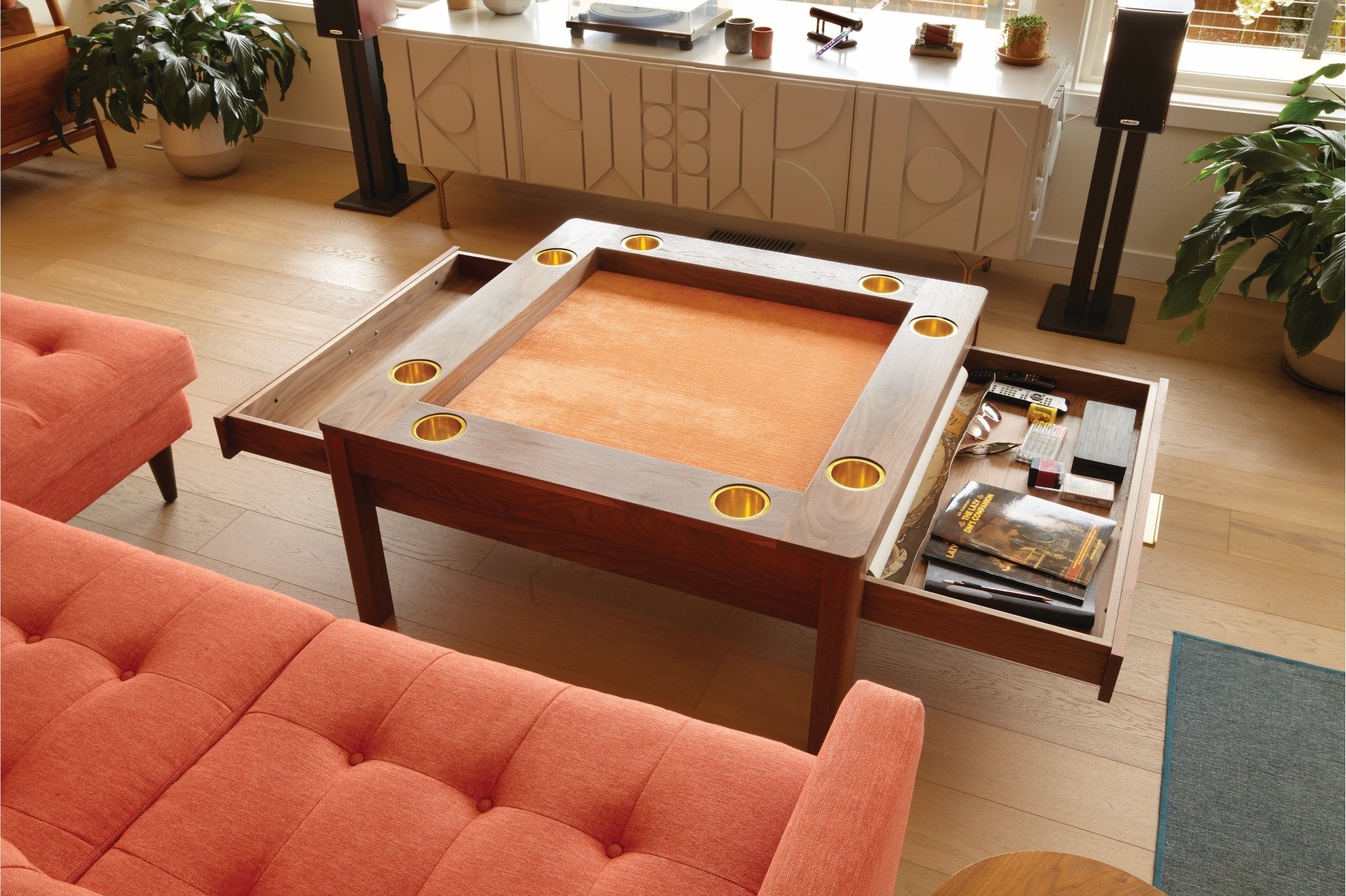
Cup holders are about as close to a must as it gets. A glass sitting on the play surface is a spill waiting to happen, and a recessed holder keeps the drink off the cloth where it belongs. After that, it comes down to how you play:
-
Chip trays and card storage keep everything organized and close at hand.
-
A dealer position gives one seat the room to run the deck and the pot.
-
Player stations and a padded rail give everyone their own space and somewhere to rest their arms on a long night.
-
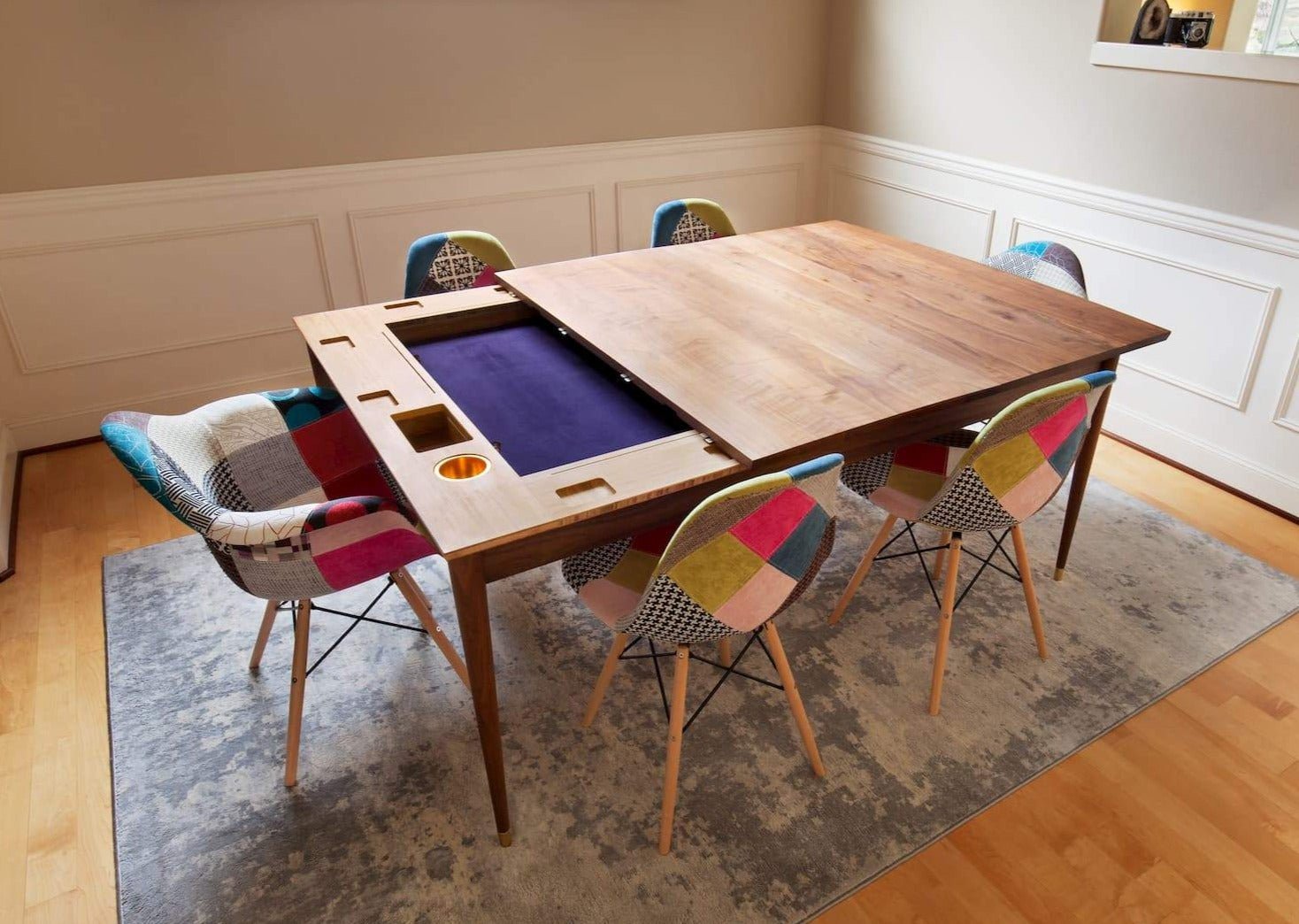
Removable toppers and leaves hand the table back to dinner, then come off again for play.
This is the part we spent the most time on with our own tables. Cup holders, dice bins, a leaf keep for stashing the dining leaf when it's off the table, they all answer the same question: how do you keep the clutter of game night off the surface you sat down to play on?
Materials and Build Quality
Material decides two things: how long the table lasts, and how steady it feels while you deal. It also decides whether the table reads as furniture in a room you share, or as gear you'd rather put away when company comes.
PVC, particleboard, and folding metal are cheaper and easy to move. They also wear faster, and the top can flex when someone shuffles hard. Solid hardwoods like walnut, cherry, white oak, and maple are heavier and steadier, with a flat surface that holds true for dealing and a lifespan you measure in decades, not years.
We build in solid hardwood, by hand, in our workshop in Edmonds, WA. A table like that costs more up front and asks you to give it a permanent spot. What you get back is a piece that holds up for years and looks like furniture the whole time it's doing it.
How you care for it follows from what it's made of. A hardwood top takes a wipe-down and the occasional oiling, and a small ding sands right out instead of chipping the way a laminate skin does.
A folding table's printed or vinyl top can't be refinished, so once it looks worn, it stays that way. And on a well-built table, the cloth can be replaced without touching the frame, which is why the hardwood base is the part you buy once.
Dedicated or Convertible: Matching the Table to Your Home
This is the decision the whole guide has been building toward. Do you want a card table that does one job, or one that converts for dinner and doubles for other games? The answer has more to do with how your house runs than with how you play.
How Often You Play, and Whether It Can Stay Out
If you play every week and have a room to spare, a dedicated table that's always set up makes good sense. If game night is more of a once-a-month thing, you're better off with a table that pulls double duty as dining furniture the rest of the time.
Storage matters here too. A folding or convertible table you can put away beats a fixed one you have to work around.
When a Convertible Table Wins the Room
For a lot of households, especially the ones sharing a single dining room, the real question is whether the table still looks like furniture the other six days of the week. A convertible design is the answer to that. Our Dresden sits in the room as a dining table, then opens to a playing surface underneath when it's time.
If your house plays a bit of everything, cards one week and a board game the next, that flexibility is worth a lot, and a family game table is built for that mix. Torn between the two? Our convertible dining table post digs into the dining side.
A Few Questions We Hear a Lot
What size table do I need for a card game?
Figure roughly 24 inches of width per player. A 48-inch round seats four to six for cards. An 84-inch oval or an 8-foot rectangular table seats eight with a dealer position. Add about three feet of clearance around the table for chairs.
Round or square, which is better for cards?
It comes down to the game and the room. Round and octagonal shapes give everyone an even view and suit poker. Square shapes seat four without wasted space and fit tight rooms, which works well for bridge, euchre, and tile games.
Is a dedicated card table worth it over a folding one?
The difference is in the surface and in how long the table lasts. A folding table stores away and costs less. A dedicated table gives you a real playing surface and a much longer life. How often you play, and whether you've got room to keep a table set up, usually settles it.

What It Comes Down To
The right playing card table is the one that fits your games and your house at the same time. Get the size and shape right so nobody's fighting for elbow room, pick a surface that suits what you play, and choose a material that'll stick around as long as you want the table to.
And if someone in the house doesn't game, count that in. The table that stays in a home is the one both people are glad to see there, whether it's holding a hand of cards or holding dinner.